
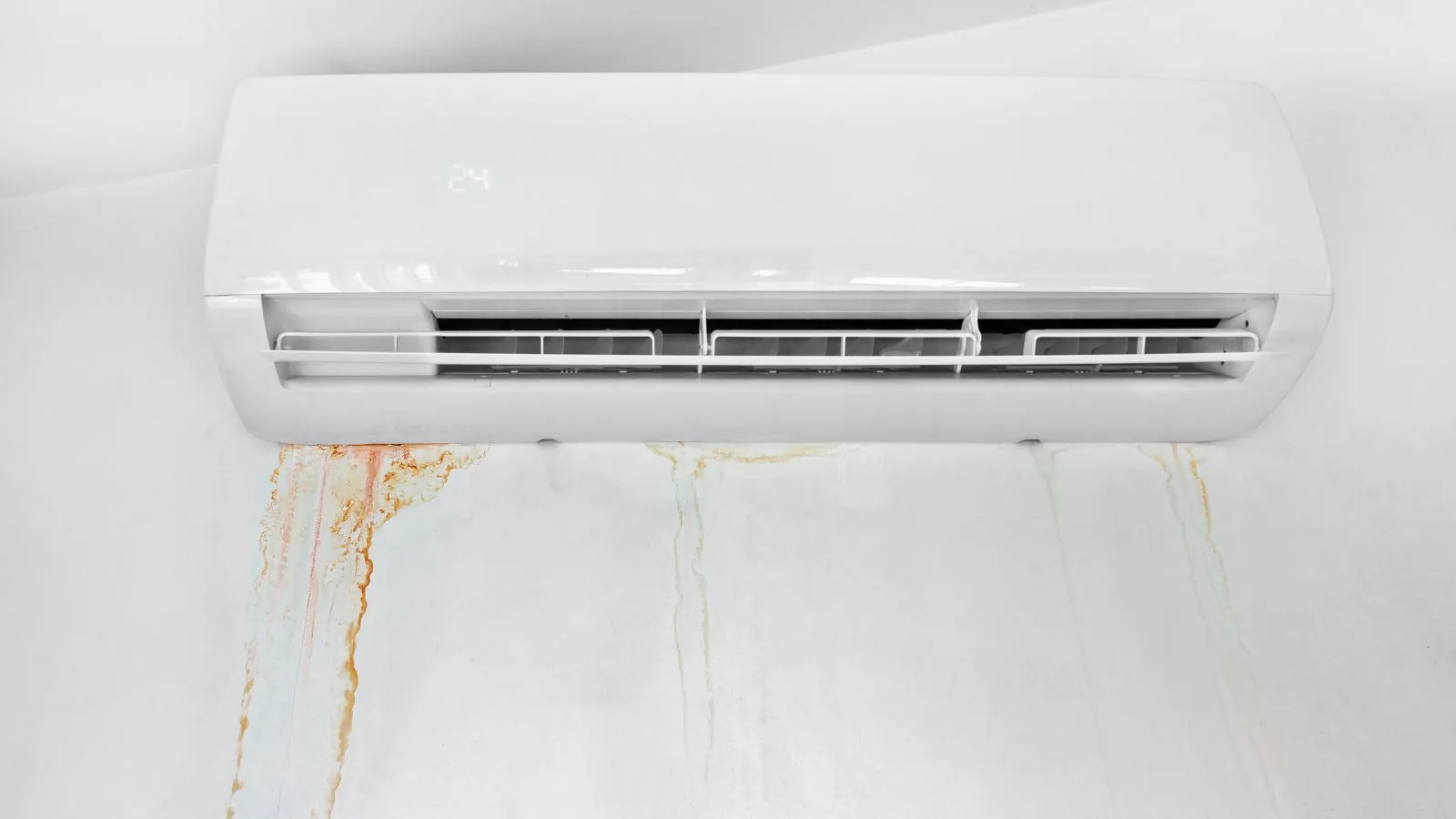
Where AC water comes from and why it escapes
Cooling pulls moisture out of indoor air, and that moisture collects as condensate in a pan under the coil. A drain line is supposed to carry it outside or to a floor drain. When the line clogs with algae and sludge, the pan overflows and water goes wherever it can, which is often down through a ceiling or into a wall.
A float switch can shut the system off before an overflow happens, but only if it is installed and working. Frozen evaporator coils create a different problem. The ice melts when the system stops and floods the pan faster than the drain can handle.
Typical AC leak locations and results
| Equipment location | What leaks | What it damages |
|---|---|---|
| Attic air handler | Overflowing drain pan | Ceiling drywall and insulation below |
| Closet or hall air handler | Clogged condensate line | Closet floor, baseboard, hardwood nearby |
| Basement air handler | Pan or line overflow | Concrete slab and stored materials |
| Wall or window unit | Poor tilt or blocked drain | Wall finish and trim below the unit |
| Rooftop or exterior unit | Line disconnect or condensate backup | Ceiling below the equipment |
How an AC leak repair job works
Stop the water
The system is shut off and the drain pan or line is cleared by an HVAC technician. We cannot dry a structure that is still being wet.
Find the wet area
Meters and a thermal camera trace water from the unit to where it traveled.
Dry in place
Hardwood, subfloor and drywall are dried whenever readings allow.
Repair
Only what could not be dried is replaced and finished.
Summer humidity and AC leaks around the lakes
Homes near Lake Mahopac, Kirk Lake and the other lakes live with humid summers, which means air handlers produce plenty of condensate. A drain line that is barely keeping up in June often fails by August. The leaks we see most come from equipment in attics, hall closets and finished basements.
We do not claim a count of AC leaks in the area. The practical point is that a service call to flush the condensate line before cooling season costs far less than a ceiling repair, and the HVAC contractor is the person to ask.
What affects the cost of AC leak repair
How long it dripped
A slow overflow over a summer is a larger drying job than a single spill.
Materials below
Wet insulation and ceiling drywall are routine. Hardwood floors raise the stakes.
Room count
Water that crossed a floor opening or ran along framing covers more rooms.
Finish matching
Ceiling texture and paint blending set the repair scope.
Drying equipment
Closed cavities and attic spaces need targeted airflow.
HVAC service
Clearing the line is the HVAC technician's bill, not ours.
We estimate in writing after inspection and separate drying from repair.
When a condensate leak damages hardwood
A condensate line that drips behind a closet wall can run under hardwood for months. The boards cup because the underside takes on moisture, and the wood looks fine until the cupping appears. If this describes your floor, hardwood floor water damage repair explains how we test, dry and decide whether boards are saved or replaced.
What to do before we arrive: AC leak
- Turn the cooling system off at the thermostat so it stops making condensate.
- Place a bucket under active drips and move rugs and electronics away.
- Do not run the unit to test whether the leak stopped.
- Photograph the drain pan, the ceiling and any stained areas.
Reference standard
We use the ANSI/IICRC S500 water damage standard as a reference for how wet structures are evaluated and dried. That is a statement about the standard we follow, not a claim of any certification. Condensate water is clean supply-type water at first, which is why quick drying matters.
AC leak has damaged a room
Call and describe where the equipment sits and what got wet.
Before repairs begin
- Have an HVAC technician clear and test the condensate line and float switch.
- Photograph the drain pan, the stained area and any rust on the equipment.
- Check closets and attic spaces for dampness beyond the visible stain.
- Ask your insurer how it treats long-term seepage versus a sudden overflow.
AC leak questions
The drain pan or condensate line is probably overflowing. Turn the system off and call an HVAC technician. Then have the ceiling checked for wet insulation.
Condensate is not contaminated by sewage, but it can carry algae and dust. It is usually handled as grey or clean water depending on how long it sat.
We repair the ceiling and dry the structure. The air handler and drain line are an HVAC contractor's job.
Sudden overflow damage is often covered, while long-term seepage is often excluded. Ask your agent.
Schedule condensate line maintenance and confirm the float switch works. Have the technician check the drain slope.
Not usually an emergency, but the longer water is in a wall or ceiling, the larger the repair. Call as soon as you notice it.