
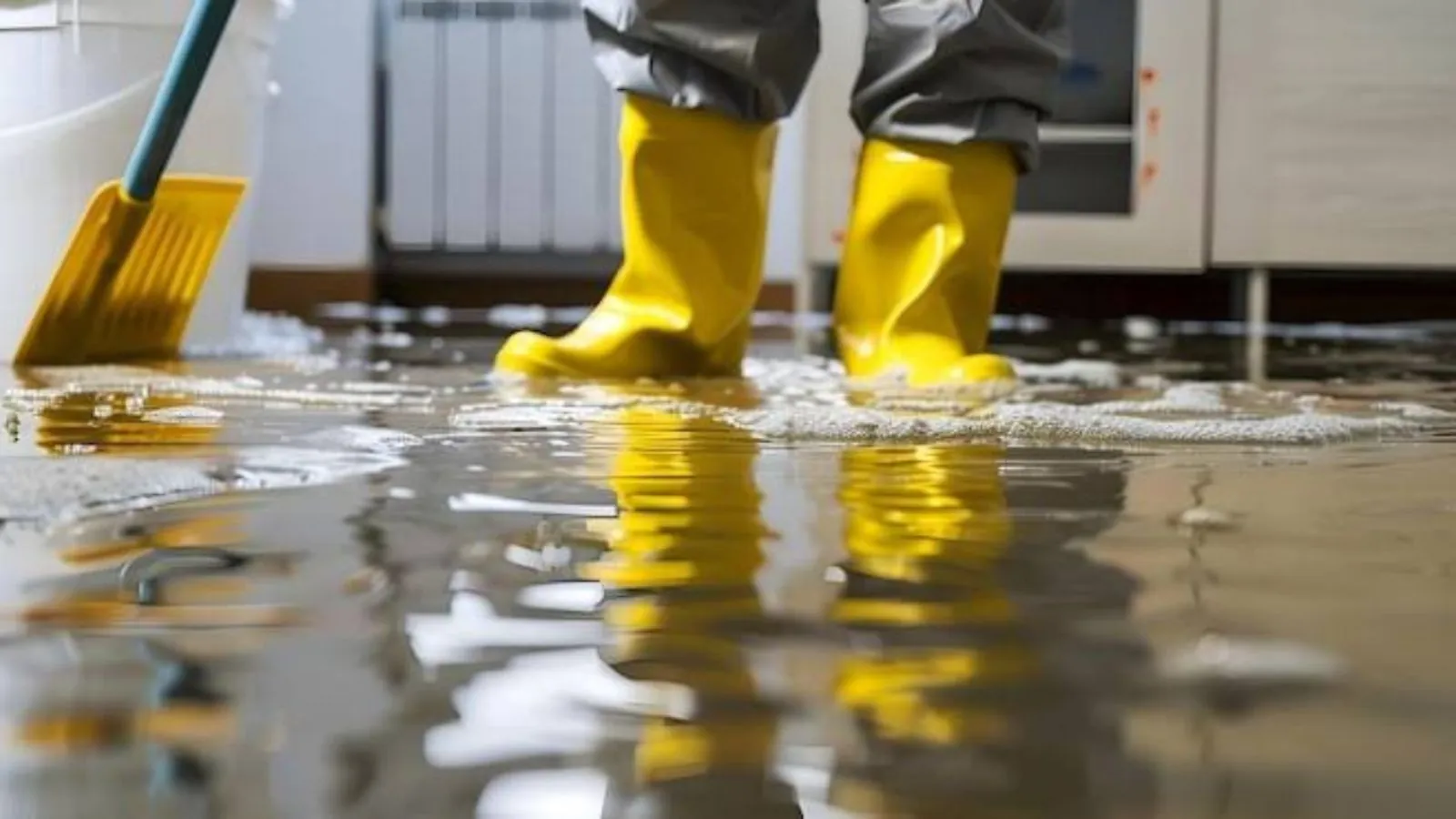
Why flood water is a different problem from a pipe leak
A burst pipe delivers clean water. Flood water arrives from storm runoff, overflowing streams and lakes or a backed-up sewer, and it carries soil, bacteria and chemicals with it. That puts it in the contaminated category, and it changes what can be dried in place and what has to be thrown away.
The materials matter too. Porous items like carpet, pad, insulation and fiberboard usually cannot be cleaned after flood contact. Drywall that wicked contaminated water often has to be cut out above the water line. Solid wood framing and concrete can be cleaned and dried, which is why we stage the work from removal to cleaning to drying.
What the local flood record says
The Putnam County hazard mitigation plan rates flood risk in the Town of Carmel as low overall, with pockets of real trouble. It lists flood-prone locations including Lake Shore Drive, the Route 6 and Clark Place area, Hill Street at Route 6, Memory Lane and Sandy Street. It also records that vegetation in the Lake Secor outlet stream has caused flooding and road closures.
The plan's insurance data shows how rarely flood policies exist compared with the exposure. As of July 28, 2020, the Town of Carmel had 73 National Flood Insurance Program policies, with 122 claims paid since the program began and 10 repetitive-loss properties. Mahopac's lakes mean groundwater can also rise on properties that never see a stream.
The Town of Carmel adopted its Flood Damage Prevention Law on January 9, 2013, and requires elevation of new construction in mapped flood zones to two feet above the base flood elevation. Ask the town building department how those rules affect repairs to a substantially damaged structure.
How we handle a flood cleanup
Secure and assess
Power, gas and structural safety are checked first. We photograph water lines and note the source.
Pump and remove
Water goes out first, followed by affected carpet, pad, insulation and contaminated drywall.
Clean and dry
Surfaces are cleaned with antimicrobial products appropriate to the water category, then dried with air movers and dehumidifiers.
Rebuild
New drywall, insulation, flooring and finishes go in once readings confirm the structure is dry.
Flood water categories in plain terms
| Category | Where it comes from | How we handle it |
|---|---|---|
| Category 1 | Broken supply line or clean rain intrusion | Extract and dry in place when caught early |
| Category 2 | Washer or dishwasher discharge, sump overflow | Clean, treat and dry, often replacing porous materials |
| Category 3 | Flood water, sewage, long-standing water | Remove porous materials, clean thoroughly, dry framing |
Flood water is normally treated as Category 3. Water left standing can move from one category to the next.
What decides the price of flood restoration
Depth and duration
Water that stood for days soaks deeper into framing than water that was pumped out quickly.
Contamination
Silt, sewage and runoff add removal, cleaning and disposal steps.
Affected area
Finished basements and ground-floor living areas cost more to rebuild than unfinished spaces.
Materials lost
Carpet, pad, insulation and drywall that cannot be cleaned are replaced rather than dried.
Drying length
Structural framing and concrete dry slowly and keep equipment on site longer.
Rebuild choices
Flooring grades, trim and paint are your decisions and follow your budget.
Scope is written and explained before repair work begins, with drying and rebuilding priced as separate parts.
Flood insurance and what a standard policy leaves out
The New York Department of Financial Services notes that a standard homeowners policy generally does not cover flood. Flood damage is normally insured through a separate policy such as one backed by the National Flood Insurance Program. Water that backs up through drains or a sump pump may be covered by an endorsement, but often not when a flood caused the backup.
Whatever your coverage, document the damage before cleaning, keep damaged items until the insurer says otherwise and save every receipt. We provide photos, readings and written scope for the claim file.
What to do before we arrive: flood
- Stay out of standing water until power to the area is confirmed off.
- Do not walk into a flooded basement, and do not use electrical appliances in wet rooms.
- Treat floodwater as contaminated and keep children and pets out.
- Photograph the high-water line and damaged items before moving them.
Reference standard
We use the ANSI/IICRC S500 water damage standard as a reference for how wet structures are evaluated and dried. That is a statement about the standard we follow, not a claim of any certification. Floodwater is generally treated as contaminated under that standard, which affects what porous materials can be saved.
Near the lakes
Lake Secor is one of the Mahopac lakes the county hazard plan describes as flooding along its outlet stream. Our Lake Secor page explains what the plan says and what it does not.
Flood water is in the building
Call and tell us how deep it is, where it came from and whether power is still on.
Related flood and water services
Lower-level flooding
Basement flooding has its own steps. See basement water damage cleanup.
Sewage in the water
If drains are backing up, read sewage backup cleanup before touching anything.
Drying phase
Wet framing and slabs are covered under structural drying.
Storm damage
Wind-driven rain and roof damage fall under storm water damage cleanup.
Flood damage questions
Standard homeowners policies generally exclude flood. A separate flood policy is the usual route, and some policies offer limited water backup coverage by endorsement. Check yours and call your agent.
Carpet that touched flood water is normally removed because it cannot be reliably cleaned. The cleanup decision is based on the water category.
Wait until power is checked, standing water is gone and contaminated materials are removed. Avoid contact with the water and wash thoroughly if exposed.
Repair permits in the Town of Carmel go through the town building department. Substantially damaged buildings in mapped flood zones face extra rules, so call them before major rebuilding.
We restore the damage. Your flood zone and elevation rules are set by the town and FEMA maps, and the building department can tell you how they apply.
Water entering that way is dealt with as a lower-level flood. A waterproofing contractor addresses entry points after we dry the space.