
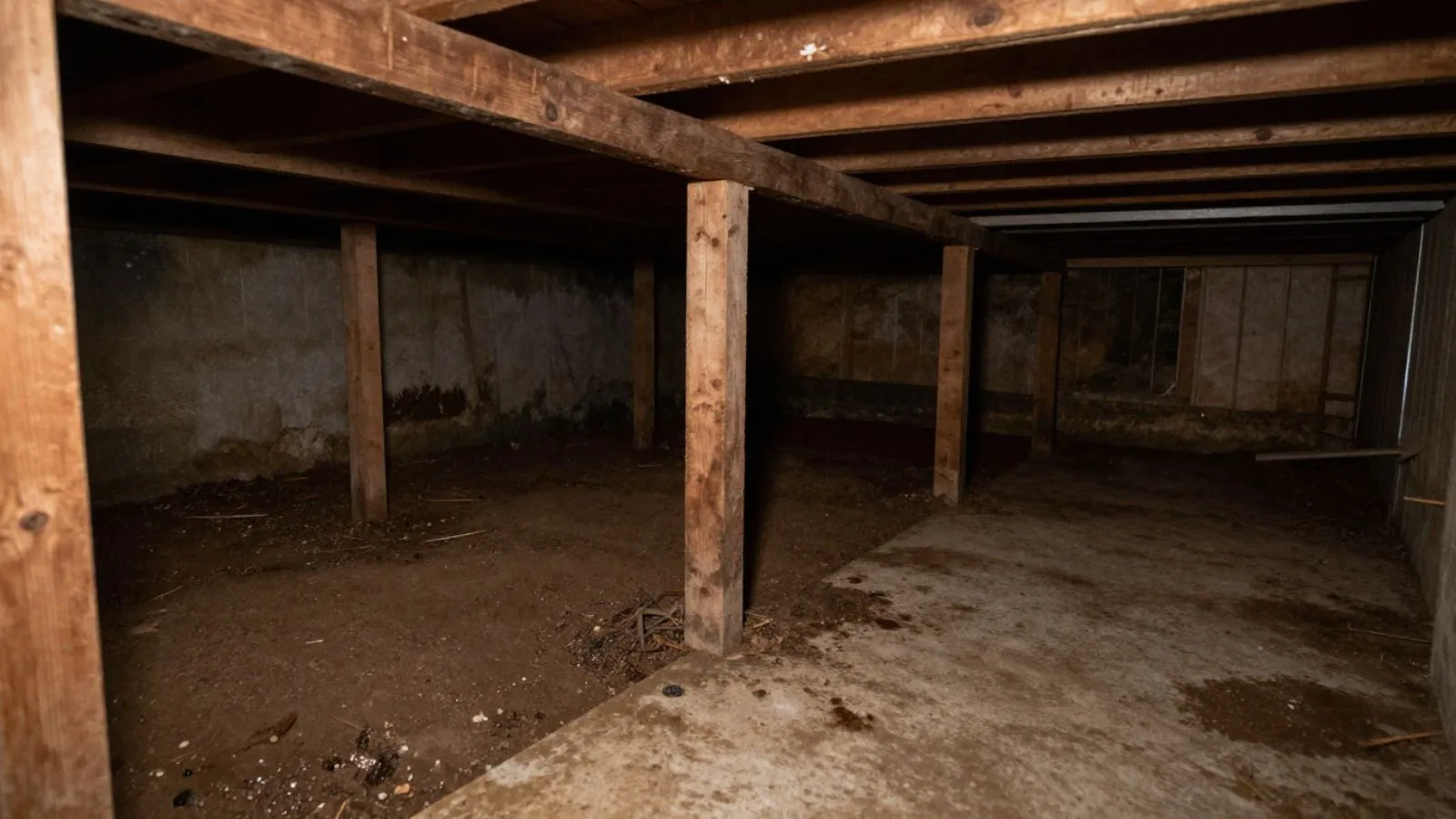
How water gets under a house
Crawl space water comes from three directions. Surface runoff slips in through vents or low walls, groundwater rises with the water table and plumbing or HVAC lines leak into the space. Sometimes the cause is plain humidity. Warm air hits cool surfaces and condenses on ductwork and pipes, dripping onto the dirt.
Sump pumps in a crawl space pit fail the same way basement pumps do, through a stuck float, a dead motor or a power outage during the storm. If the pit fills and the pump is not working, the crawl space can hold water at the level of the joists in no time.
What a crawl space cleanup involves
Pump and remove
Standing water is pumped from the lowest point. Wet vacuums handle the rest.
Remove wet materials
Soaked insulation, vapor barrier scraps and sometimes stored items are removed.
Dry the structure
Air movers and a dehumidifier dry joists, subfloor and sill plates.
Report and recommend
We tell you what we see, including whether water is entering from outside or from a plumbing leak.
Crawl space water clues and next steps
| What you find | What it points to | Who fixes it |
|---|---|---|
| Standing water after rain | Grading, drainage or high water table | Drainage or waterproofing contractor |
| Dripping from the subfloor | Plumbing leak above | Plumber |
| Wet ductwork and insulation | Condensation or a duct leak | HVAC contractor |
| Wet sill plates | Water entering at the foundation line | Waterproofing or mason |
| Wet insulation sagging | Long-term moisture | Insulation after drying |
Crawl spaces near the lakes and on sloped lots
Mahopac's mix of lakefront, hillside and low-lying lots means water behaves differently from street to street. The Putnam County hazard plan names flood-prone locations in the Town of Carmel, and properties near the lakes and outlet streams have higher groundwater to deal with. Lake Secor's outlet has a history of backing up because of overgrown vegetation, which affects its low-lying neighbors.
A crawl space is also where the Town of Carmel's building code and your insurer's conditions meet. If you plan to change the space, ask the building department about permits before you start.
What decides crawl space cleanup cost
Water depth
A thin film and a foot of water are different pumping jobs.
Access
Low clearance and tight openings slow every task.
Insulation volume
Wet batts across a large area mean more removal and disposal.
Contamination
Sewage or rodent contamination changes protective measures.
Drying time
Wood framing in a damp enclosed space dries slowly.
Cause fix
Drainage and waterproofing are separate trades.
We tell you plainly when the real fix belongs to another contractor.
Insulation and vapor barriers after a wet event
Insulation hanging between joists acts like a sponge when water splashes up from below or drips from above, and it holds moisture against the wood. Removing it is usually the first step. Once the framing is dry, you and your builder can choose whether to reinstall batts, use rigid board or leave the space as it was.
Plastic ground cover that was in place can trap moisture if it is torn or lapped poorly. We note its condition and tell you what we see, but installing or replacing it is a building decision. A crawl space that stays damp every season is a drainage and ventilation question for a specialist.
Reference standard
We use the ANSI/IICRC S500 water damage standard as a reference for how wet structures are evaluated and dried. That is a statement about the standard we follow, not a claim of any certification. Crawl spaces are damp by nature, so we compare readings against a dry reference point in the same house.
Crawl space is wet and you are worried
Call and tell us what you see from the access hatch.
Before anyone goes in
- Treat standing water as electrical until the circuits are checked.
- Take photos from the hatch rather than climbing in.
- Look for a running water sound or a damp spot beneath bathrooms and kitchens.
- Check that dryer and bath vents discharge outside rather than into the space.
If the water is clean, light and recent, the work is mostly extraction and drying. If it smells like sewage, see sewage backup cleanup.
Crawl space questions
That is a waterproofing and building decision, not a restoration one. We dry the space after a water event and tell you what we see.
If insulation stayed dry, yes. Wet batts usually have to be removed because they hold water against the wood.
Moisture readings on joists and subfloor at dry levels, plus no standing water, show the space is dry.
Sudden water from a burst pipe is often covered. Seepage and groundwater are often excluded. Ask your agent.
Odor often fades once materials are dried or removed. A persistent smell means something is still wet.
Only if power to the space is off and you have protective gear. Many people choose to let a crew handle it.