
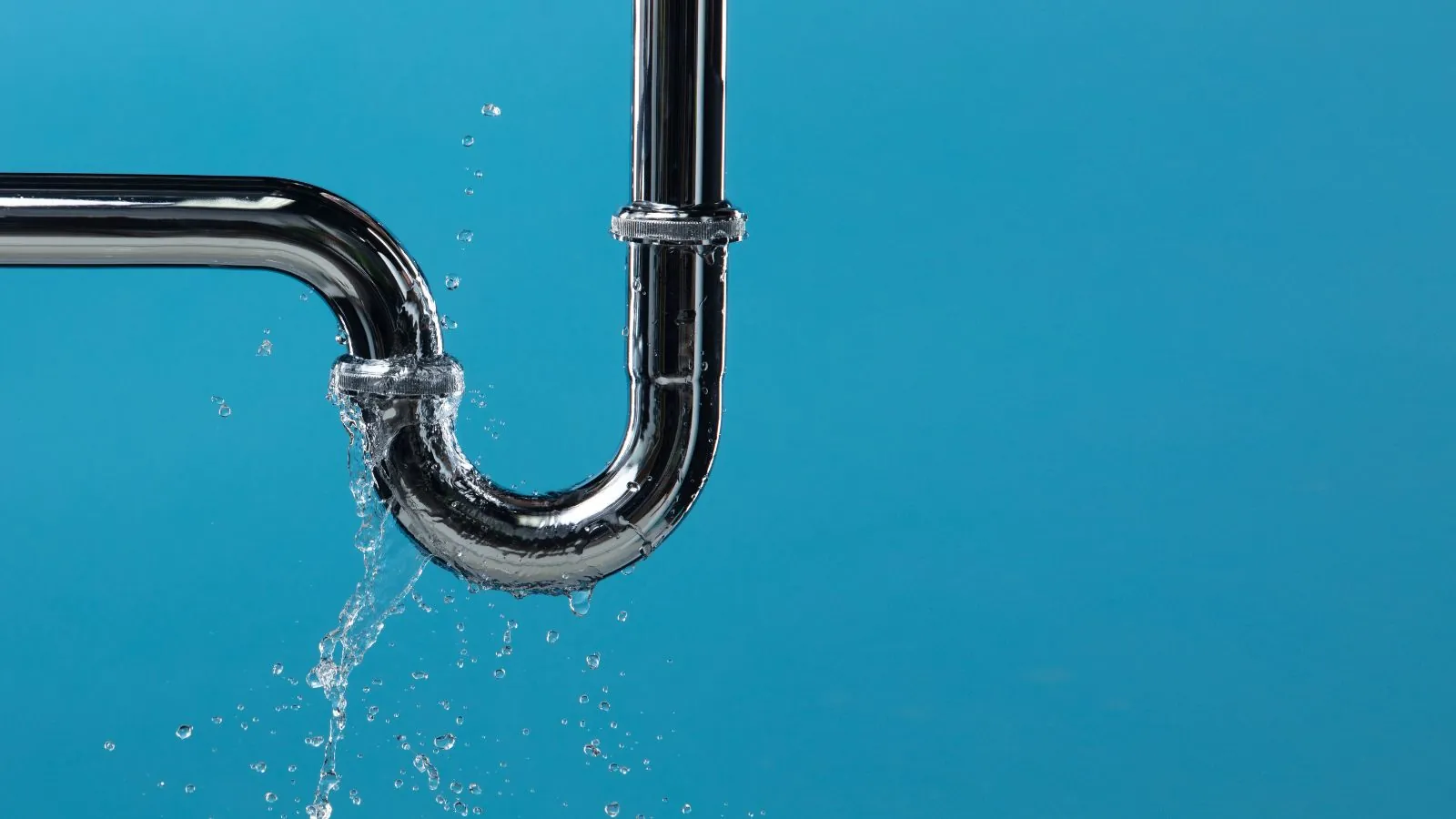
Where kitchen water damage starts
| Source | Where water hides | First sign |
|---|---|---|
| Sink supply or drain | Cabinet base and floor | Swollen cabinet bottom |
| Dishwasher hose or gasket | Under the dishwasher and into the subfloor | Soft or warped floor at the dishwasher |
| Refrigerator ice maker line | Behind and under the fridge | Water at the base or a musty odor |
| Faucet or garbage disposal | Under the sink and toe kick | Dampness and staining inside the cabinet |
| Window over the sink | Wall below the window | Peeling paint under the sill |
Why cabinets make kitchen leaks worse
Particleboard and MDF cabinet boxes soak up water like a sponge and swell permanently. Solid wood and plywood handle moisture better, but finishes can lift and joints can separate. A leak that runs for even a day can ruin the bottom of a base cabinet.
Water also runs under cabinets, where it cannot be wiped away. Toe kicks and the space beneath them need to be opened to dry, and the floor beneath the cabinet run may be wet even when the visible floor looks fine.
How we dry and repair a kitchen
Stop the source
The supply is shut off and the plumber or appliance technician fixes the leak.
Open and check
Toe kicks, cabinet backs and base panels are opened and measured with meters.
Dry in place where possible
Air movers and drying mats work under and behind cabinets.
Rebuild what failed
Swollen cabinet parts, flooring and drywall are replaced and finished.
Older kitchens and lake-house plumbing
Many Mahopac homes have kitchens that have been remodeled around older plumbing. Copper lines, galvanized remnants and shutoff valves from different decades sit behind cabinets that were installed later, and the weak link is often a valve that has not been turned in years.
If your remodel involves permits, the Town of Carmel building department handles them. We do not claim that any particular fixture is common in the area. We only note that old valves and supply lines are worth replacing when you open up a wall or cabinet.
What drives kitchen restoration cost
Cabinet material
Particleboard bases are usually replaced. Plywood bases may be dried.
Countertops
Stone and laminate tops may need to come off for access.
Flooring
Tile, vinyl and hardwood respond differently to water.
Duration
A slow leak leaves more wet material than a quick spill.
Appliances
Moving a refrigerator or dishwasher adds time.
Rebuild
Cabinet matching and finishes follow your choices and claim.
We separate drying and rebuilding in writing so you can compare with your claim.
Appliances, countertops and what stays in place
Moving a refrigerator or dishwasher is part of finding the water. Both can hide a slow leak, and the floor under them stays wet long after the visible floor dries. We pull appliances only when needed, protect the floor as we go and put them back when drying is complete.
Countertops usually stay unless water is trapped beneath them. Stone and laminate tops are bonded to cabinet boxes, so removing them to dry a cabinet is a decision that depends on readings and on how well the cabinet can be dried in place.
Kitchen water damage and your insurance policy
A sudden failure such as a burst supply line or an overflowing dishwasher is often covered under a homeowners policy, while a leak that went on for weeks may be treated as wear and tear. Keep the failed part, photograph the cabinet interior and keep receipts. Your agent can tell you how your policy treats each case.
What to do before we arrive: kitchen leak
- Close the shutoff under the sink and turn off the dishwasher.
- Empty the cabinet base and set items on a dry surface.
- Remove standing water with towels and avoid running a household vacuum on it.
- Photograph the cabinet interior, the floor and the supply lines.
Reference standard
We use the ANSI/IICRC S500 water damage standard as a reference for how wet structures are evaluated and dried. That is a statement about the standard we follow, not a claim of any certification. Cabinet bases and toe kicks hold moisture, so readings are taken there before repairs start.
Kitchen leak has damaged the cabinets
Call and describe where the water came from.
While waiting for repairs
- Empty the wet cabinet and keep stored items off the floor.
- Close the supply valve to the leaking fixture.
- Photograph the cabinet interior, floor and any stains.
- Keep the failed part, such as the hose, for the insurer.
If the leak ran under the floor, hardwood floor water damage repair explains the next steps for wood. For subfloor and wall work, see wall and drywall water damage repair.
Kitchen water damage questions
Plywood and solid wood often can, if dried quickly. Particleboard that has swollen usually cannot.
Only if water got under it or the cabinet must be removed. We check first.
Expect wet subfloor and cabinet bases. A moisture survey shows how far it spread.
Sudden failures are often covered and gradual leaks often are not. Ask your agent.
Not if everything wet is dried or removed. A persistent smell means something is still wet.
No. A plumber repairs the plumbing and we handle drying and repair.