
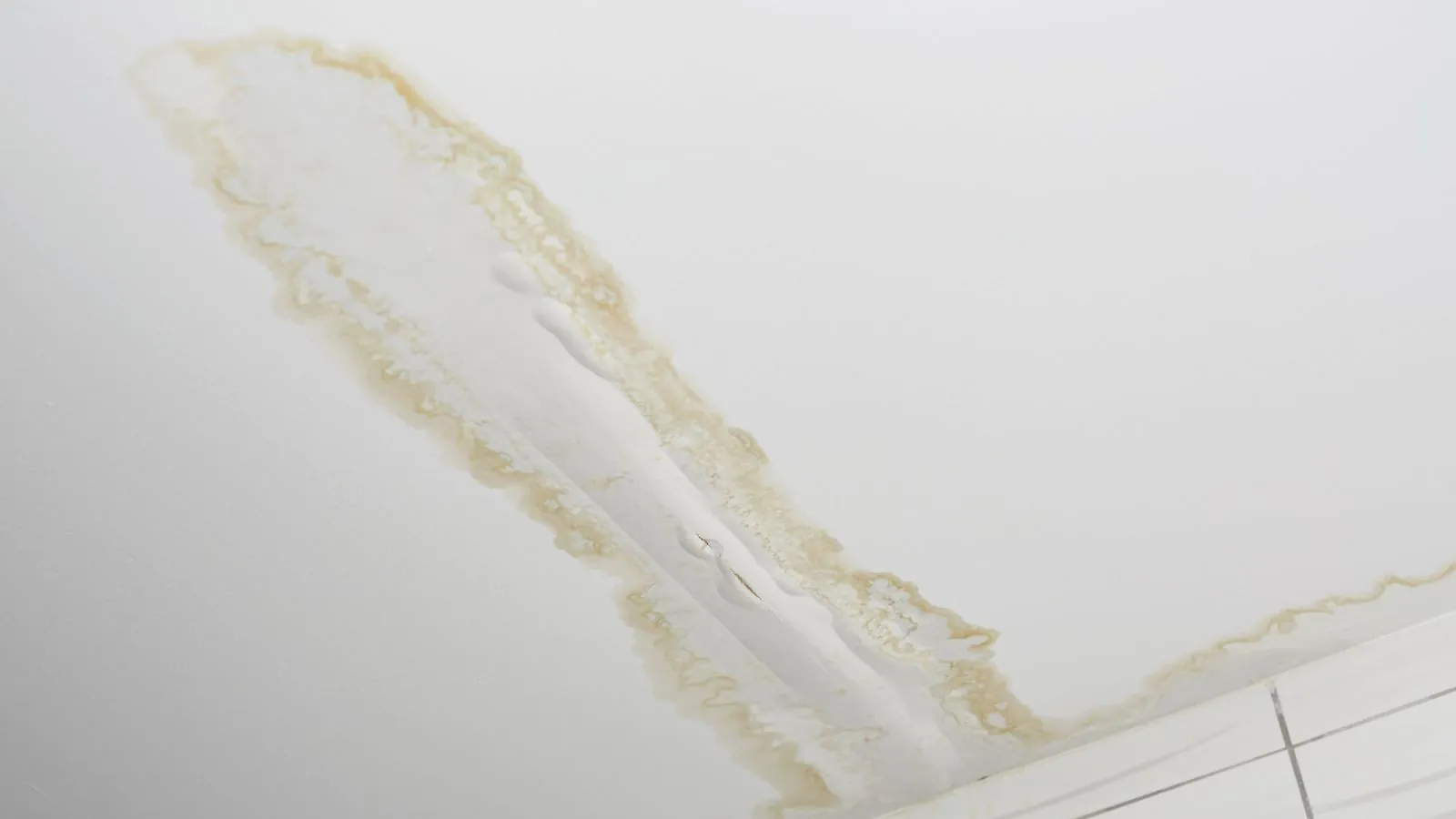
Reading a ceiling stain
A brown ring means water has been present for a while and dried at the edge. A fresh gray stain that is still damp means it is still arriving. Bubbling paint and a soft spot to the touch mean the drywall has absorbed water and is losing strength.
Sagging is the point where action cannot wait. Water pools between the drywall and insulation and the weight pulls the board down. If the sag is large, relieve it in a controlled way with a small hole over a bucket. Do not stand beneath it, and call us instead of poking at it with a ladder.
Where the water usually comes from
| Source | Clue | Who fixes the source |
|---|---|---|
| Roof covering or flashing | Stain follows rain or snowmelt | Roofer |
| Ice dam at the eave | Stain at an exterior wall in thaw cycles | Roofer and insulation contractor |
| Bathroom or kitchen above | Stain under a fixture or tub | Plumber |
| Attic water line or tank | Stain with no weather link | Plumber |
| Condensation in the attic | Damp insulation with no outside leak | Insulation or HVAC contractor |
We repair the interior damage. The source needs its own contractor, and we can work around their schedule.
How a ceiling water damage job runs
Relieve and inspect
Trapped water is drained safely, then a moisture meter and thermal camera show how far it spread.
Remove the wet material
Saturated drywall and wet insulation come out, usually in a clean rectangle that is easy to patch.
Dry the cavity
Air movers and a dehumidifier dry framing and the space above until readings match dry reference materials.
Repair and finish
New drywall, taping, texture and primer matching the room follow, with paint to the corner or to the full ceiling.
Roof and ceiling leaks after Mahopac wind and rain events
The Putnam County hazard mitigation plan records several wind and rain events in the Town of Carmel, including a May 15, 2018 tornado, a February 7, 2020 storm and an April 13, 2020 wind and rain event with gusts near 50 miles per hour. Events like these lift shingles, loosen flashing and drive rain into places that normal weather does not reach.
Many Mahopac houses are wooded, with branches that rub shingles and drop debris into valleys and gutters. A clogged gutter that backs water under a shingle edge is a common cause of a ceiling stain at an outside wall. A roofer can tell you which of these applies to your roof, and we handle the damage inside.
What affects ceiling repair cost
Size of the wet area
A palm-sized stain is a patch. A sagging section across a room is a larger replacement.
Hidden insulation and framing
Wet insulation above the drywall has to be removed and the cavity dried.
Ceiling texture
Popcorn, orange peel and flat finishes need different matching work.
Paint scope
Painting to a natural break gives a better match than a spot patch.
Height and access
High ceilings and stairs need staging and more crew time.
Source repair
Roof or plumbing repair is separate and may be required before finishes go back.
We separate drying, removal and finishing so you can see where the money goes.
What to do before we arrive: ceiling leak
- Place a bucket under the drip and move furniture away.
- Do not stand under a bulging or sagging ceiling, and keep others out of the room below it.
- Turn off lights and fans on that circuit if water is near the fixture.
- Photograph the stain, then check the attic or room above when it is safe.
Reference standard
We use the ANSI/IICRC S500 water damage standard as a reference for how wet structures are evaluated and dried. That is a statement about the standard we follow, not a claim of any certification. Ceiling water often carries insulation and dust, which is part of why we check the cavity before repair.
Ceiling is wet and getting worse
Call now, then move belongings out from under the stain.
Roof leaks and the next storm
- Call a roofer promptly. A tarp or temporary repair keeps the next storm from adding to the damage.
- Photograph the stain, the attic and the roof from the ground before anything is touched.
- Keep wet insulation out of the living space and bag it for the insurer to see if they ask.
- Ask your insurer whether roof wear or storm damage is the cause, since coverage often depends on that.
We repair the ceiling and dry the attic space. Roofing work is outside what we do, though we can describe what we see for the roofer.
Painting and finish work
Once the framing is dry and the new board is in, finishing is a matter of taping, mudding and texturing. Spot-priming stains before paint keeps them from bleeding through. For related wall work, see wall and drywall water damage repair.
Ceiling water damage questions
Not until the cause is fixed and the ceiling is dry. Stain-blocking primer helps, but paint over wet drywall will peel and the stain returns.
Yes. Trapped water can bring the drywall down. Move out from under it and call.
No. A roofer repairs the roof. We handle the interior damage and can coordinate drying around roofing work.
Usually not. We replace the section that failed and blend the repair, and a full repaint of the ceiling gives the cleanest match.
Sudden storm damage commonly is, while wear and long-term leaks often are not. Your policy and the adjuster's findings decide.
A dry stain still needs the cause fixed and often a stain-blocking primer. If the drywall is soft or the insulation was wet, it needs replacing.