
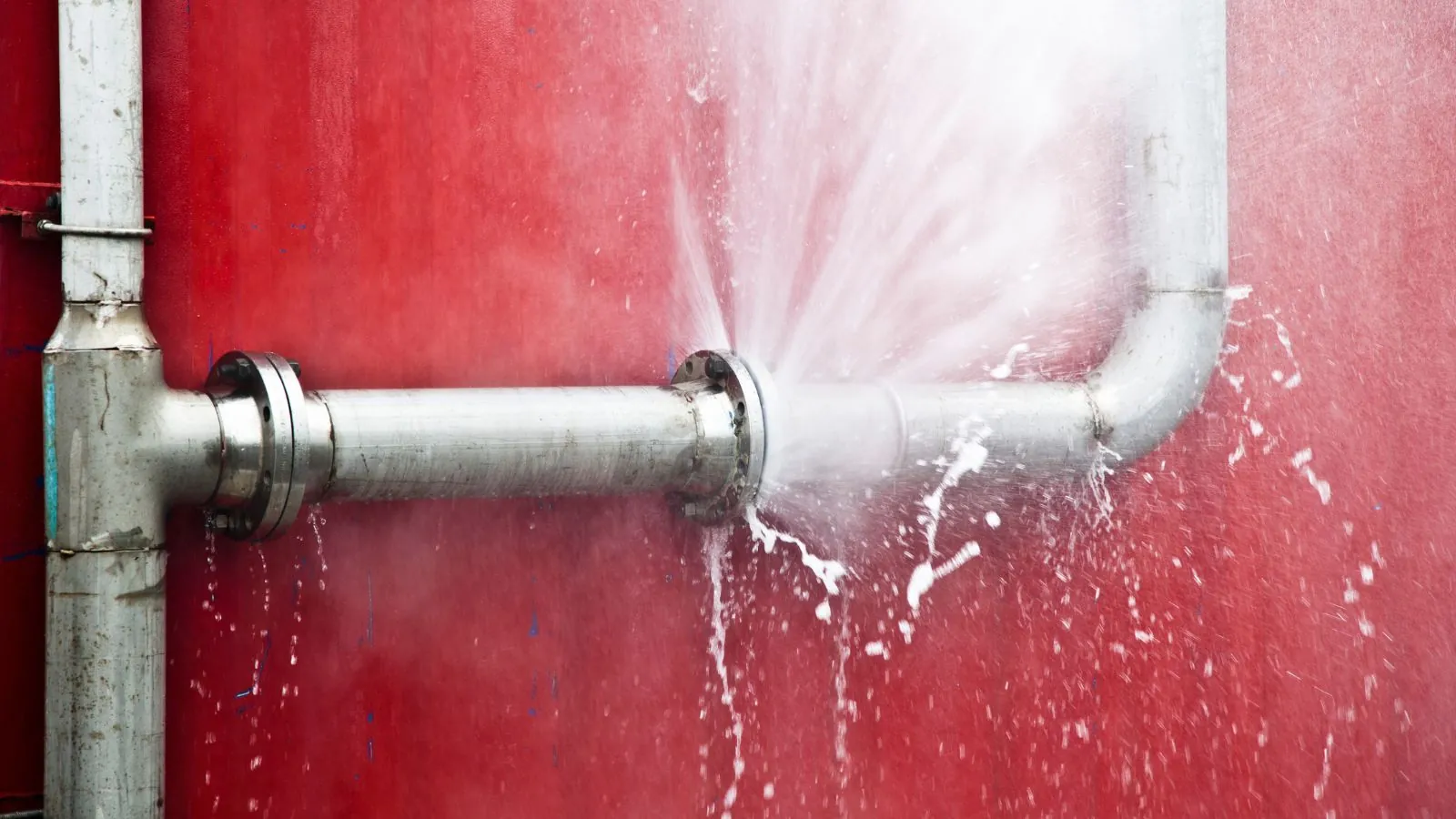
The first ten minutes after a pipe bursts
What you do before anyone arrives changes the size of the job. Work through these in order and stop as soon as one step is unsafe.
Close the main
Shut the main valve where the line enters the house, usually near the meter or in the basement or utility room.
Drain the system
Open the lowest faucet so remaining water drains out, and turn off the water heater supply.
Kill power where wet
Switch off breakers for flooded rooms if you can reach the panel dry.
Document and call
Photograph the pipe and the water, then call us and your insurer.
If you have never located your main, do it this week and tag it. Every minute of running water adds to the repair scope, so a shutoff you can find in seconds is worth a lot.
Why pipes burst in Mahopac and the Putnam County lake belt
Freezing is the textbook cause. Water expands as it turns to ice, and the pressure builds between the ice and a closed faucet until the pipe or fitting gives way. The rupture often happens in a spot that was frozen, and the water only pours out once it thaws.
Age is the other big factor. Older galvanized and copper lines corrode from the inside, and a weakened section can fail without any freeze at all. High water pressure and worn fittings add to the risk. Homes that began as lake cottages sometimes have a patchwork of repairs from different decades, so the weakest point may be a joint that nobody has looked at in years.
Where burst pipes do the most damage
| Pipe location | What gets wet | Why it is hard to catch |
|---|---|---|
| Inside an exterior wall | Insulation, drywall, framing | Water stays hidden behind finished walls |
| Basement ceiling joists | Finished ceiling, floor above, wiring | Water drops through light fixtures and vents |
| Under a kitchen or bath | Cabinet bases, vanity floor, subfloor | Cabinets hide the spray until it spreads |
| Attic supply or tank line | Ceiling insulation and drywall | Water pools above the ceiling before it shows |
| Unheated crawl space | Joists, insulation, subfloor | Nobody sees it until floors feel soft |
What a burst pipe cleanup bill is made of
Repairing the pipe itself is a plumber's job. Our part is the water damage, and these are the factors that move that scope.
How long it ran
A line caught in minutes soaks a room. One that ran overnight reaches walls and the floor below.
What it hit
Finished drywall, hardwood and insulation cost more to dry or replace than concrete and unfinished framing.
How far it spread
Water that passed through a floor opening doubles the number of rooms to dry.
Water category
Clean supply water is the easiest. If it mixed with sewage or sat for days, the scope changes.
Drying equipment
More wet area means more air movers and dehumidifiers running for more days.
Repair choices
Drying and repair are separate lines. You can approve the drying now and decide on repairs after the readings.
We put the scope in writing after the inspection and explain which items are drying and which are repairs.
Burst pipes and winter in the Mahopac area
Putnam County sits north of New York City with colder winters than the five boroughs, and Mahopac's lake homes tend to have long exposed runs in garages, crawl spaces and outside walls. The Town of Somers hazard plan, which covers nearby Baldwin Place, notes that icing is a recurring problem along Route 6. The same cold snaps that ice the road can freeze a poorly protected line.
If you are not sure your plumbing is safe, ask a licensed plumber about insulating exposed runs and where your shutoffs are. Our frozen pipe water damage page covers the thaw side of the problem.
What we remove and what we try to save
- Wet insulation, which holds water and loses its value once soaked.
- Drywall that is saturated, swollen or touched by contaminated water.
- Flooring and pad that cannot be dried back to normal readings.
- Baseboard and trim that can usually be pulled, dried and reinstalled.
- Subfloor and framing, which we dry in place almost every time.
The goal is the smallest removal that leaves a dry, stable structure. Your insurer's adjuster will want to see what was removed, so we photograph before and during demolition.
What to do before we arrive: burst pipe
- Shut off the main water valve, then open a faucet at the lowest level to relieve pressure.
- Turn off power to wet areas if water is near outlets, and stay out of rooms where water reaches the panel.
- Move belongings off wet floors and photograph everything before cleanup.
- Call a plumber for the repair and keep the failed section of pipe.
Reference standard
We use the ANSI/IICRC S500 water damage standard as a reference for how wet structures are evaluated and dried. That is a statement about the standard we follow, not a claim of any certification. Burst supply lines usually involve clean water in the first hours, so timing affects what can be dried in place.
A pipe has burst and water is spreading
Call now, even if you are still working on the shutoff.
Repairs after the water is gone
Once the structure meets drying goals, repair starts. That can mean new drywall, paint, trim and flooring, or only paint when the wall was dried in place. A good drying job often shrinks this list. If the damage reaches the ceiling below, our ceiling water damage repair page explains that side, and wall and drywall water damage repair covers the wall work.
Burst pipe questions
Close the main water shutoff, open a low faucet to drain the line, switch off power to wet areas if the panel is dry and call. Take photos before anything is moved.
Sudden pipe bursts are commonly covered, while gradual leaks and flood are often excluded. Your policy language decides, so call your insurer and read the water damage section.
We handle the water damage. A licensed plumber replaces the pipe. We can work around a plumber's schedule so drying and repair stay on track.
Yes. Cabinets hide water and the base soaks quickly. Shut off the supply under the sink or at the main and call so the cabinet and floor can be checked.
A moisture meter and a thermal camera show wet areas behind finished walls without cutting every wall open. Cuts are made only where readings justify them.
Treat it as one. Small leaks become large damage when the supply stays on, and wet drywall keeps absorbing.