
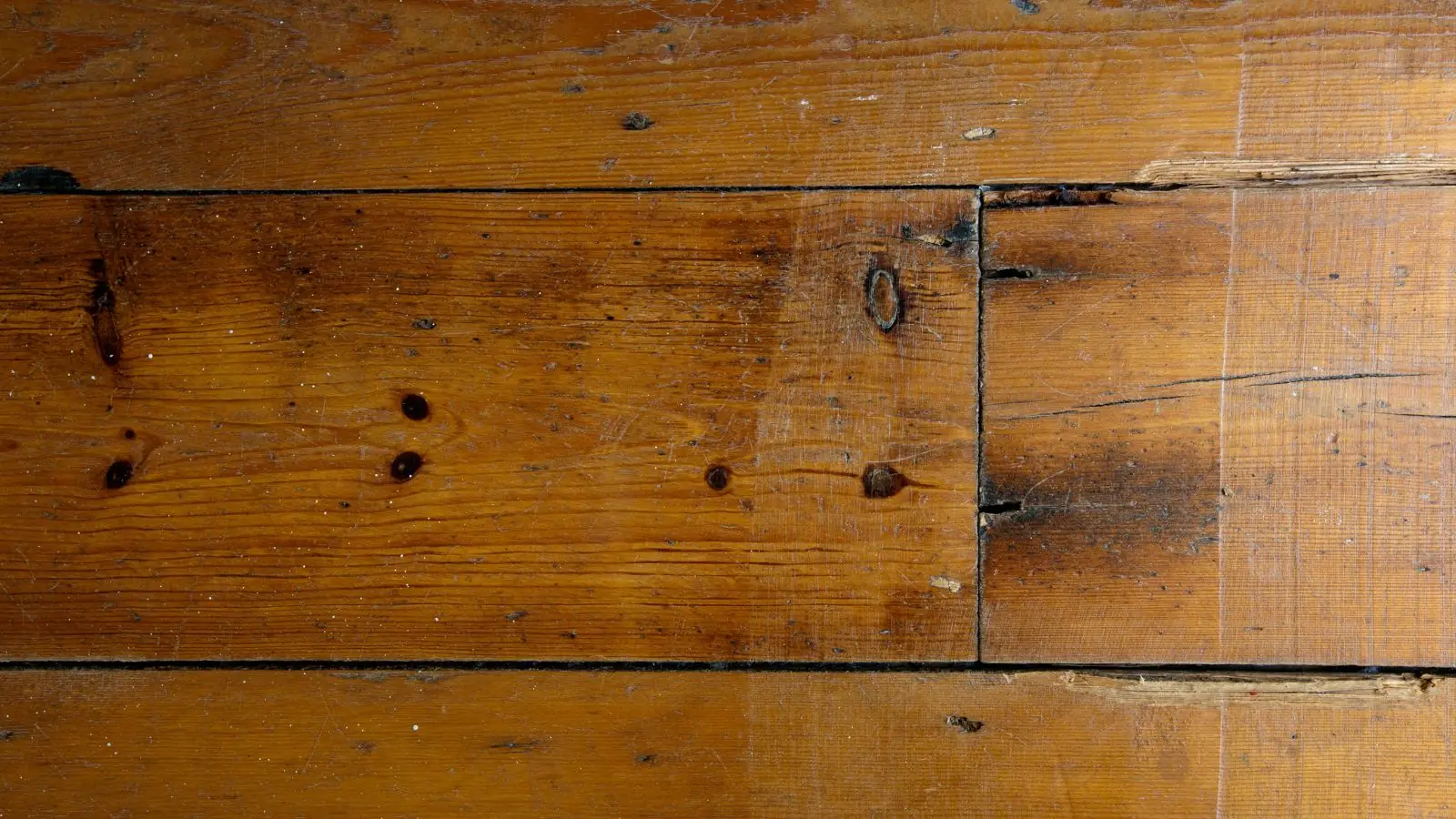
What water does to a hardwood floor
Wood is hygroscopic, which means it takes on and gives up moisture based on the air and surfaces around it. When water gets under or onto the boards, the wet side swells while the dry side does not, and the boards curl. Cupping is when the edges rise above the center. Crowning is the reverse, with the center rising.
Buckling is the extreme case. The boards lift off the subfloor, sometimes in a long ridge. That happens when swelling pushes the floor against its own perimeter and nails and glue fail. Once boards have buckled, replacement is more likely than drying.
Damage levels and likely outcomes
| Condition | What it means | Likely outcome |
|---|---|---|
| Surface wet, no movement | Caught quickly | Dry in place, often with no refinishing |
| Slight cupping | Moisture in the underside | Controlled drying, then sand and refinish if needed |
| Strong cupping or crowning | Substantial moisture | Drying may flatten it, some boards may be replaced |
| Buckling or loose boards | Swelling past the limit | Replace affected sections |
| Black staining or soft wood | Long-term moisture or rot | Remove and replace, check the subfloor |
How we dry hardwood
Map moisture
Meters test boards and subfloor, and a thermal camera shows the wet pattern.
Remove surface water
Extraction and a dehumidified room begin the process.
Use drying mats
Mats pull moisture from the boards, and a few boards are sometimes removed to give the subfloor access.
Wait and reassess
Cupping may take time to settle, and readings guide whether sanding or replacement follows.
Why we do not sand wet floors
Sanding a cupped floor that is still wet flattens the high edges, and then the floor dries and the lows turn into new ridges. Waiting until moisture readings match your dry reference, and often until the floor has settled, gives a better result. Refinishing is the last step, not the first.
Leaks behind hardwood in lake-area homes
Many of our hardwood calls start with a slow source rather than a flood. An air conditioner condensate line, a dishwasher leak or a bathroom supply line can wet the subfloor for weeks. The first sign is a floor that has begun to cup in one area and nowhere else.
If your home sits near the lakes, high summer humidity can also raise the moisture in the floor. A moisture reading tells you whether the cause is a leak or a general humidity problem. If a leak is found, AC leak water damage and kitchen water damage restoration cover two common sources.
What affects hardwood repair cost
Species and thickness
Solid wood can be sanded several times. Thin engineered wood has less margin.
Area affected
A single room is not a whole-floor refinish.
Finish matching
New boards may need staining to blend.
Subfloor condition
A wet or rotted subfloor adds repair work.
Drying duration
Mats and monitoring run for days.
Refinish scope
Refinishing one room versus a continuous floor changes the cost.
We separate drying from replacement and refinishing, and you can choose a flooring contractor for the finish.
Solid, engineered and floating floors behave differently
Solid hardwood is nailed or stapled over a wood subfloor and can often be dried and refinished several times over its life. Engineered flooring has a thin hardwood layer over plywood, and it can delaminate when it gets wet, which limits what drying and sanding can recover. Floating floors rest on a pad, and water can spread under the whole floor before any board shows damage.
Glued-down floors on concrete are the hardest to dry because the adhesive traps moisture. If you do not know which type you have, a moisture survey and a look at an edge or a vent opening usually answers it.
What a hardwood moisture check includes
- Readings on several boards across the damaged area and in a dry reference room.
- Readings in the subfloor where accessible from below or through a pulled board.
- A look at the underside of the floor from the basement or crawl space if there is one.
- Checking wall bases and baseboards where water wicks upward.
- A repeat reading after drying begins to confirm the trend.
Reference standard
We use the ANSI/IICRC S500 water damage standard as a reference for how wet structures are evaluated and dried. That is a statement about the standard we follow, not a claim of any certification. Wood floors are dried against a reference reading from unaffected boards.
Hardwood is cupping or stained
Call and tell us what happened.
Hardwood water damage questions
Often yes, if it is dried properly and moisture is the only issue. It can take weeks to settle.
Not before moisture is mapped. Pulling the wrong boards can make repair harder.
Sometimes. The thin wear layer limits sanding, and glued floors can delaminate.
Moisture is trapped somewhere. A moisture survey finds where.
Sudden damage is often covered, while slow leaks often are not. Ask your agent.
After readings match your dry reference and the boards stop moving. That can take longer than the drying itself.