
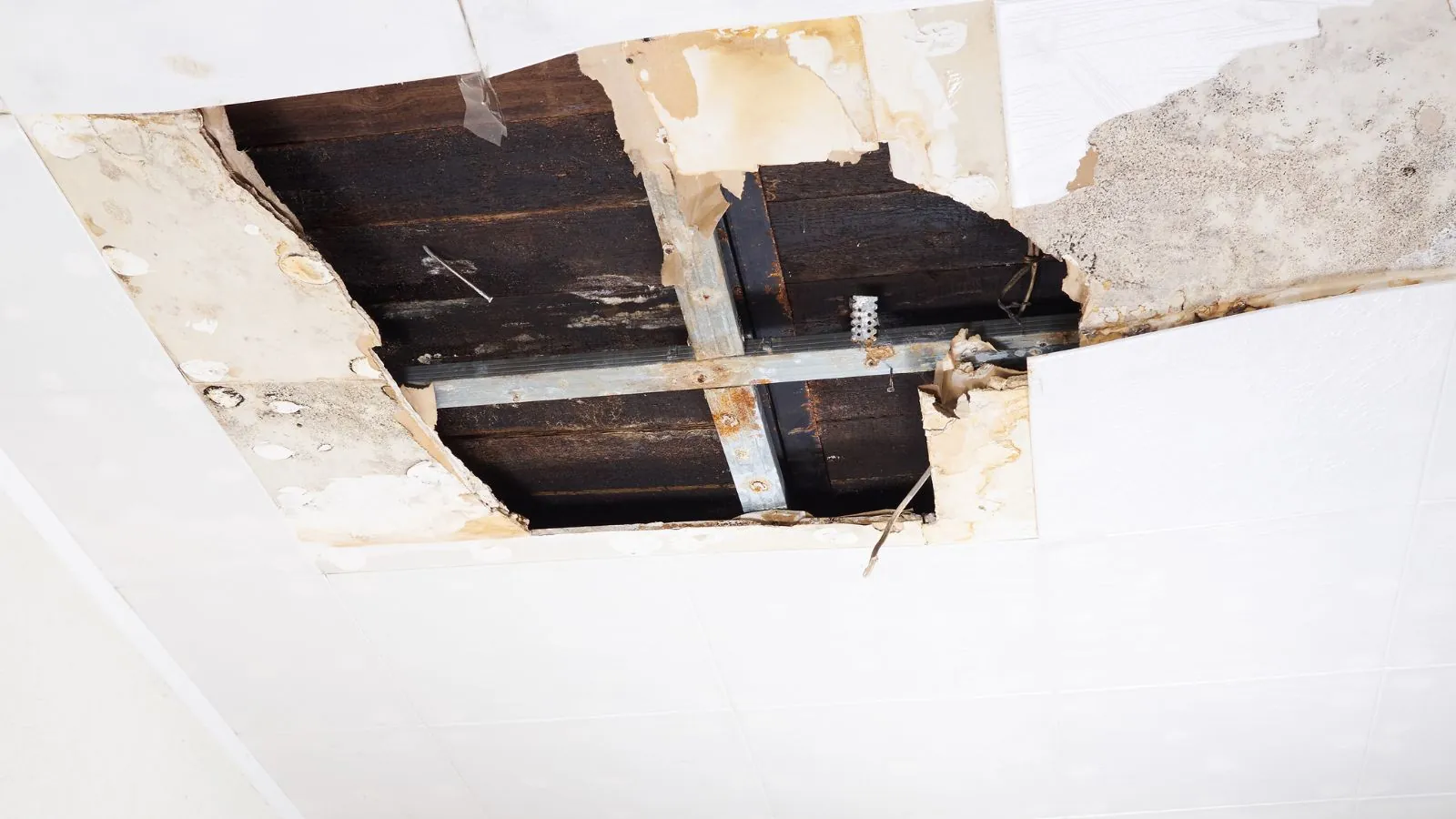
Why commercial water damage is different
A business loss involves more people. There is a property owner, one or more tenants, an insurer for each and often a lease that decides who pays for what. The building itself is also more complex, with suspended ceilings, shared walls, commercial carpet tile and HVAC above the ceiling.
Time matters differently too. A retail space that cannot open loses revenue every day, and a restaurant has health inspection implications. We plan the work around keeping the unaffected parts of the building operating where it is safe to do so.
How we run a commercial job
Secure the building
Water source off, power isolated where wet, area barricaded and occupants moved.
Extract and protect
Standing water goes out first and inventory and equipment are moved or covered.
Dry the structure
Air movers and dehumidifiers dry walls, floors and ceilings with readings logged.
Repair in phases
Repairs are staged so parts of the space can reopen as they are finished.
Common commercial water losses
| Building type | Typical cause | What to protect first |
|---|---|---|
| Retail storefront | Supply line or roof leak | Inventory, displays and flooring |
| Restaurant | Kitchen supply lines, grease trap overflow | Equipment, food storage and floors |
| Office | Ceiling leak, HVAC condensate, toilet overflow | Computers, records and carpet tile |
| Multi-unit residential | Upper unit leak or burst riser | Units below and shared corridors |
| Marina or lakefront business | Storm surge and runoff | Inventory and electrical service |
Commercial districts around Mahopac
Mahopac's commercial core runs along Route 6, around Clark Place and South Lake Boulevard, with marinas along the southern shore of Lake Mahopac. The Putnam County hazard plan names the Route 6 and Clark Place area among flood-prone locations in the Town of Carmel, which makes it a place where storm water and business interruption overlap.
Older buildings along these corridors can have additions, basements under storefronts and wiring that has changed over decades. If your property is leased, check who is responsible for the building shell and who covers tenant improvements before the adjuster arrives.
What drives commercial restoration cost
Square footage
Larger affected areas multiply equipment and labor.
Building systems
Suspended ceilings, shared walls and HVAC add steps.
Contents
Inventory, records and equipment have to be moved or documented.
After-hours work
Overnight and weekend work keeps businesses open but takes crews off other jobs.
Phasing
Staged repairs add visits but reduce downtime.
Tenant versus owner
Who pays for which part of the building is set by the lease and insurance.
We scope the building, the contents and the drying in writing and break out what is drying and what is repair.
Documentation for commercial claims
- Photos and video of the loss before cleanup.
- A list of damaged inventory, equipment and records.
- Moisture readings and drying logs from our job.
- Dates and times of each response and the work performed.
- Your lease and policy, which decide who files and who pays.
We cannot state your policy coverage, but a business insurance policy often has separate sections for property and lost income. Ask your agent which applies.
What to do before we arrive: commercial loss
- Stop the source and secure the area so staff and customers stay out of wet zones.
- Protect inventory, records and equipment, and photograph them first.
- Tell your landlord, property manager or insurer as your lease and policy require.
- Make a list of affected rooms and the hours each was wet.
Reference standard
We use the ANSI/IICRC S500 water damage standard as a reference for how wet structures are evaluated and dried. That is a statement about the standard we follow, not a claim of any certification. Commercial drying plans are documented with readings so building owners and insurers can review them.
Business has water on the floor
Call and tell us the building type and the source.
Related services for commercial properties
Large extraction
Deep or widespread water is covered in water extraction.
Storm damage
Storm runoff and wind-driven rain are in storm water damage cleanup.
Drying
How we dry large structures is in structural drying.
Sewage
Backups in a restroom or kitchen are in sewage backup cleanup.
Commercial water damage questions
Yes. The emergency line is open around the clock, including weekends and holidays.
Often, in unaffected areas. We assess safety and plan the work to keep as much of the building operating as is safe.
The lease decides. Both parties may have insurance. We document the loss so both can use it.
We can move and protect contents, and we recommend documenting damaged items before disposal.
We supply photos, moisture readings and scope. Coverage decisions are the insurer's.
Yes. We contain work areas and communicate with owners and neighbors as the building allows.