
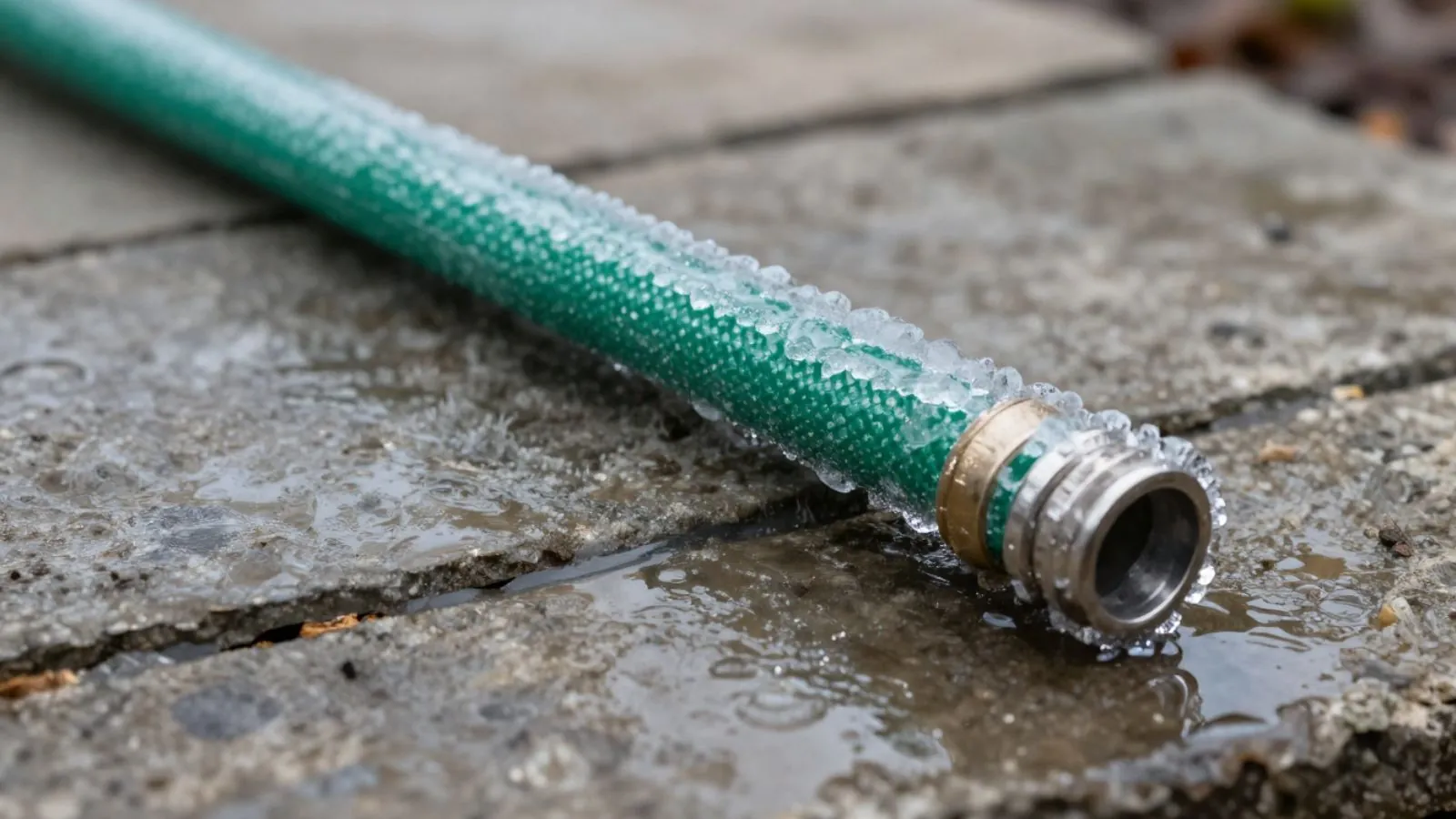
Why the damage comes after the thaw
A frozen pipe is blocked with ice, and the ice itself holds the split closed. The pressure between the ice plug and a closed faucet is what ruptures the wall of the pipe. When temperatures rise or the heat comes back on, the ice melts, and a pipe that was already cracked suddenly has an open path.
That is why people leave for work with a dripping faucet and come home to a ceiling on the floor. If you suspect a pipe is frozen, close the main shutoff before thawing anything. Water that cannot enter the house cannot leak out of a split.
If you think a pipe is frozen right now
Shut the main
Close the main valve first so a hidden split cannot release water when it thaws.
Open the faucet
Open the nearest tap on the frozen line so steam and water have somewhere to go.
Warm gently
Use warm air from a hair dryer or space heater at a safe distance, never an open flame or torch.
If water has already appeared, skip the thaw and call. A plumber repairs the split, and we remove the water and dry what it reached. Our water extraction page explains the pumping step.
Where frozen pipes usually fail in lake-area homes
| Location | Typical cause | What to look for |
|---|---|---|
| Garage and breezeway walls | Lines run on the cold side of insulation | Damp drywall along a ceiling or wall base |
| Unheated crawl space | Open vents and thin insulation | Soft floors and wet joist bays |
| Outdoor spigot connections | Hose left attached over winter | Water inside the wall near the spigot |
| Lake-facing additions | Lines pushed to exterior walls | Stains below sinks on outside walls |
| Seasonal rooms heated on demand | Heat left off between visits | Standing water or a burst fitting on arrival |
Cold-weather plumbing in the Mahopac lake belt
Mahopac grew into a year-round community, but a lot of its housing started as lake cottages, and older additions, enclosed porches and garages can have plumbing that was never designed for deep cold. That mix of old and new construction is where freeze splits tend to hide. A line run through an exterior wall to a bathroom addition is a classic example.
The Town of Somers hazard plan, covering Baldwin Place, notes icing along Route 6, which gives a sense of how hard freezing conditions hit this corridor. We do not claim a frequency for local freezes, but if your home sits near the lakes or on open ground along the Route 6 corridor, wind exposure on exterior walls matters.
What drives the cost after a frozen pipe splits
Where the split was
A split in an open basement is a mop-up. A split behind a finished wall means opening it, drying it and rebuilding it.
How long it ran
A leak caught in minutes versus one that ran over a weekend changes the drying area.
Insulation and drywall
Wet insulation usually has to go. Drywall is judged by readings and any contamination.
Flooring below
Water that dropped to a lower level adds rooms and materials.
Equipment days
Dense framing and closed cavities take longer to dry than open spaces.
Repair scope
Drying is one line. Replacing finishes is another that you can schedule separately.
We scope drying and repair separately in writing so you can compare the numbers with your claim.
Documentation your insurer will want
- Photos of the split pipe, the ice and the water damage before cleanup.
- The date and approximate time you found the leak and when the heat was last on.
- Receipts for emergency plumbing, extraction and drying.
- A list of damaged contents with approximate ages and values.
- Moisture readings from the drying job, which we provide.
Frozen pipe losses are commonly covered when the house was heated and the damage was sudden. Policies differ, so read yours and ask your agent about any condition on heat or vacancy.
What to do before we arrive: frozen or split pipe
- Shut off the main water valve before you try to thaw anything.
- Open the faucet on the frozen line, and warm the pipe gently with a hair dryer, never an open flame.
- Check for splits at the frozen section before turning the water back on.
- Photograph any wet walls and ceilings below the pipe.
Reference standard
We use the ANSI/IICRC S500 water damage standard as a reference for how wet structures are evaluated and dried. That is a statement about the standard we follow, not a claim of any certification. Water from a split pipe in a wall can travel, so we check the cavity and the floor below.
Pipes thawed and the ceiling is wet
Call now and describe where the water is showing up.
Preventing the second freeze
After repair, it is worth asking a plumber about insulating exposed lines, sealing air leaks around pipe penetrations and relocating a vulnerable run. Leaving a faucet at a slow drip during a hard freeze keeps water moving, and opening cabinet doors lets room heat reach supply lines. For a longer-term view of how winter fits into the year, our burst pipe water damage page covers cleanup in detail.
Frozen pipe questions
Only if no water is leaking and you can do it with gentle warm air. Never use an open flame. If you see a crack, bulge or any water, call a plumber and us instead.
Water at a joint, a stain that grows, a faucet that sputters or a drop in pressure are all signs. Once the line thaws, a split announces itself quickly.
Often, when the damage is sudden and the home was heated. Policy conditions vary, so check yours and file as soon as possible.
Close the main and call a plumber. If the line is split but still frozen, it will leak as it thaws.
Usually not effectively. Wet fiberglass and cellulose hold water and are normally removed so the cavity can dry.
It depends on materials and how wet they are. Meters tell us when the structure reaches its goal, and we adjust equipment as readings change.