
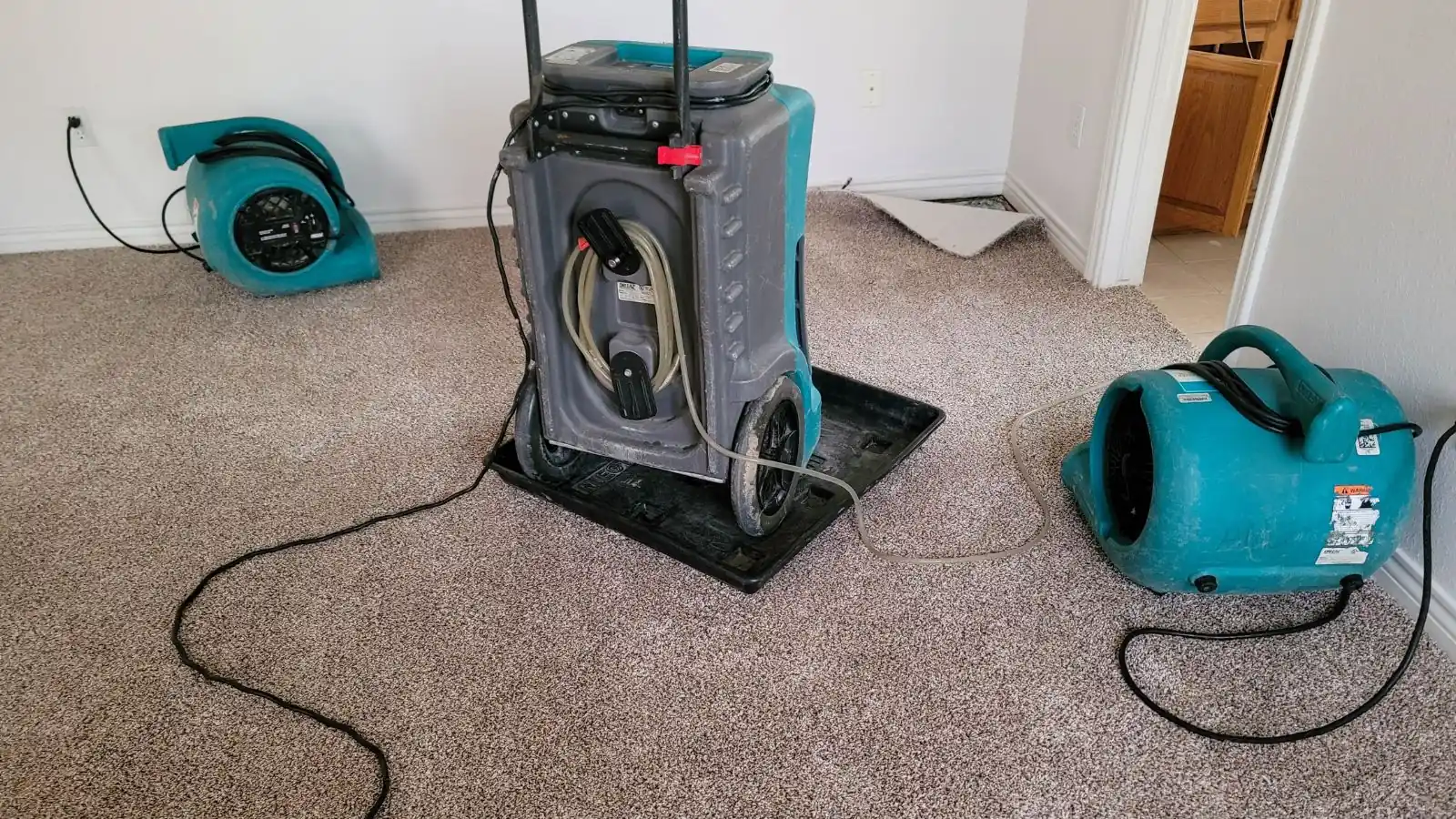
Signs a structure is still wet
A building can look dry and still hold water. Common signs include a musty odor in a room that was wiped up, paint that bubbles or peels, baseboards that stay cool and damp, windows that fog in a closed room and floors that feel slightly soft.
A humidity meter reading above normal indoor range and a damp feel in the air point the same way. These signs do not tell you where the water is, which is why drying starts with measurements.
How structural drying works
Map moisture
Meters and a thermal camera locate wet materials and set a baseline.
Set equipment
Air movers push air across wet surfaces and dehumidifiers pull moisture out of the air.
Monitor and adjust
Readings are taken during the job and equipment is moved as areas reach their goal.
Confirm and remove
Drying ends when readings match dry reference materials, then equipment comes out.
Drying approach by material
| Material | How it dries | Common issue |
|---|---|---|
| Drywall | Air movers on the surface and a dehumidified room | Swelling or sag from saturation |
| Wood framing | Slow evaporation with controlled air | Stays wet longer than the surface |
| Concrete slab | Dehumidification with airflow across the surface | Releases moisture for days |
| Hardwood flooring | Controlled drying to avoid cracking | Cupping and crowning |
| Plaster and brick | Low-speed, long-term drying | Salt staining and spalling |
What the readings mean
Moisture meters report different scales for different materials, so a drywall reading and a wood reading cannot be compared directly. We compare each material with a dry reference from an unaffected part of your building. That reference sets the drying goal.
The ANSI/IICRC S500 water damage standard is the industry reference for how to evaluate and dry structures. We use it as a framework, not as a guarantee that every material reaches a particular number.
Humidity and drying in lake-area homes
Drying is harder where outdoor air is already humid, and Mahopac summers sit next to a lake with plenty of water in the air. That is the reason dehumidifiers do more of the work than fans, and why we close the room off and control the air during the job.
In winter, the issue is the reverse. Dry cold air helps, but cold framing dries slowly and pipes in exterior walls are a risk. We adjust equipment to the season.
What affects structural drying cost
Area wet
More rooms and more wet material mean more equipment.
Materials
Hardwood, plaster and concrete take longer than carpet.
Days on site
Equipment is billed by the days it runs, so drying time sets cost.
Access and demolition
Opening cavities speeds drying and affects repair.
Monitoring visits
Readings are taken during the job and logged.
Repair
Replacing finishes is separate from drying.
We explain drying scope and expected duration before equipment is set, and you receive the moisture log at the end.
Why drying takes days and not hours
Water leaves a material only as fast as the air around it can take it. A dehumidifier lowers the moisture in the air, air movers push that dry air across surfaces and heat helps both. Dense materials such as framing, plaster and concrete release moisture slowly from the inside, so the surface can read dry while the core is still wet.
Rushing the job by shutting equipment off early is the common mistake. The material then rewets from its own interior, and the problem returns as odor, paint failure or floor movement a few weeks later.
Your drying log and what it is for
Every drying job produces a record of readings by date, room and material, along with the equipment placed and removed. That log is useful to you and to an insurer because it shows what was wet, how it responded and when it reached its goal. We give you a copy at the end.
What to do while drying is under way
- Leave equipment running and plugged in for the whole drying period.
- Keep doors and windows closed in humid weather so damp air stays out.
- Do not move air movers without calling, because airflow is placed on purpose.
- Keep a log of dates, readings and any changes you notice.
Reference standard
We use the ANSI/IICRC S500 water damage standard as a reference for how wet structures are evaluated and dried. That is a statement about the standard we follow, not a claim of any certification. Drying goals are set for each material, and readings show when those goals are reached.
Structure still damp after the water is gone
Call and tell us what was wet and when.
What to expect while the equipment runs
- Fans and dehumidifiers run continuously, so expect noise and some added warmth.
- Keep windows and exterior doors in the drying area closed.
- Do not move equipment without telling us. Position matters.
- Expect visits to take readings and reposition units.
Structural drying questions
It depends on the material, the amount of water and the weather. We read the structure daily and tell you when it reaches its goal.
For small spills, yes. For wall cavities, subfloors and large areas, professional equipment and measurements make the difference. We do not rent equipment.
It is a sign of dampness. Mold may or may not be present. If you suspect it, ask a testing professional and ask whether your state licenses mold work.
No. Many wall cavities dry through small holes or baseboard removal. We open only where readings justify it.
Equipment uses electricity, so yes. The cost is small compared with the cost of removing wet materials later.
Readings match dry reference materials, and you receive the log.