
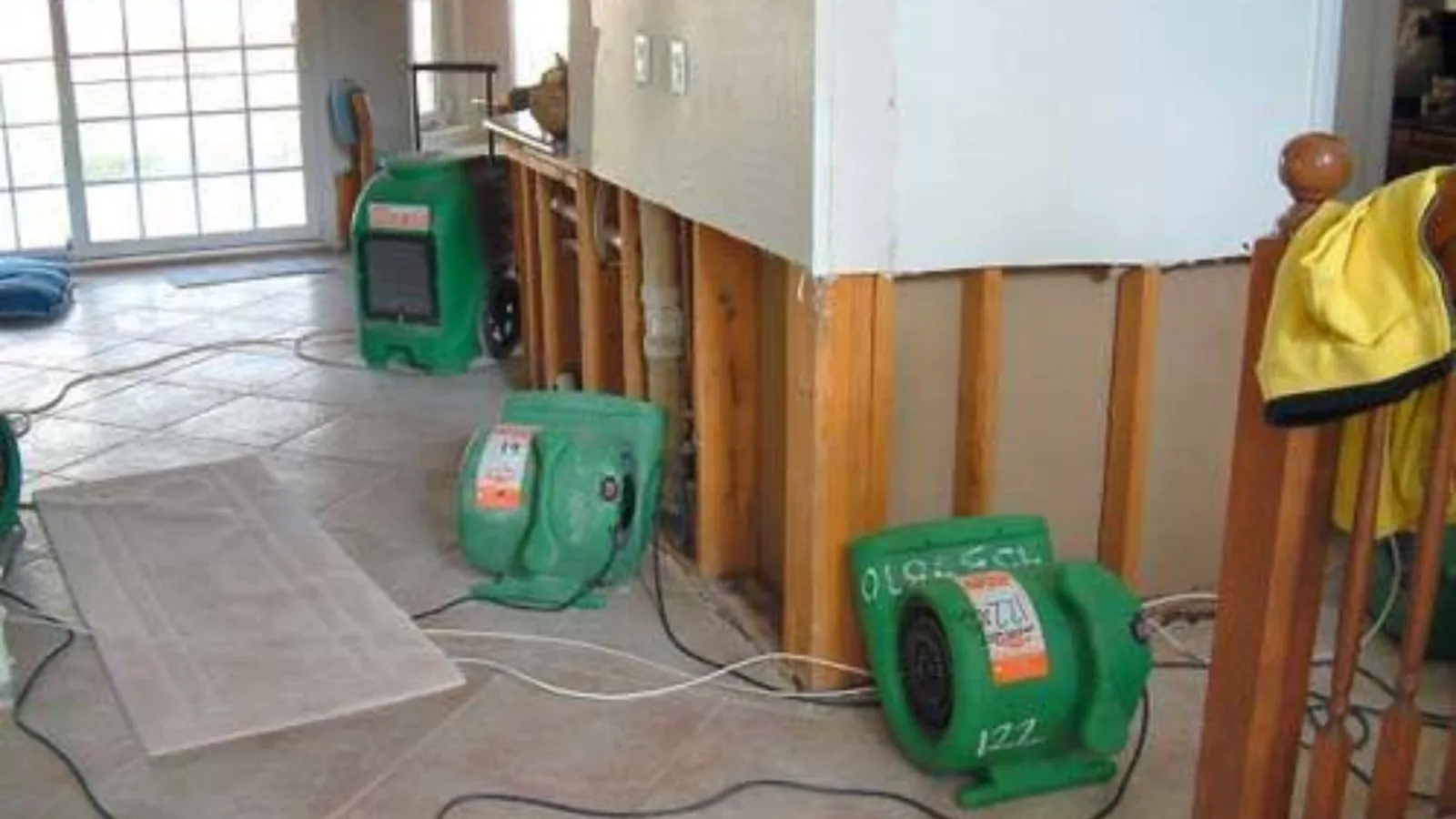
How water travels inside a wall
Drywall is gypsum between paper faces. Water enters through the paper and gypsum softens, and the board wicks water upward like a wick. A puddle that reaches the baseboard can leave drywall wet a foot or two above the floor.
Inside the wall, water follows studs, plates and wiring holes. Insulation holds it against the framing, and a wall that feels dry on the surface can be wet behind. Moisture readings from the surface and a thermal camera show what is happening.
Drywall condition and what to do
| Condition | Likely cause | Typical response |
|---|---|---|
| Stain only, no soft spot | Old or minor leak | Fix the source, prime and paint |
| Soft or swollen board | Saturated gypsum | Cut out and replace |
| Peeling paint or bubbles | Moisture in the paper face | Dry, scrape and refinish or replace |
| Wet insulation behind | Water in the cavity | Remove insulation and dry framing |
| Dark or fuzzy surface | Prolonged dampness | Remove affected board and dry |
How a wall repair proceeds
Locate the wet area
Meters and a thermal camera map the wicking line and the hidden cavity.
Cut and open
Drywall is cut above the wet line, often a flood cut at a consistent height, so the cavity can dry.
Dry the framing
Air movers and dehumidifiers dry studs and plates.
Replace and finish
New insulation, drywall, tape, mud, texture and paint complete the repair.
Plaster, drywall and older walls in the Mahopac area
Older homes in the Mahopac area can have plaster and lath in some rooms and drywall in others. Plaster dries more slowly and is more likely to crumble when soaked, so replacement of plaster sections may be needed even after a clean water leak.
Homes near the lakes may also have exterior walls that have taken water through siding and window trim over time. If a stain keeps coming back after a repair, a contractor should look at the exterior as well. We handle the interior drying and finishing.
What affects drywall repair cost
Wet area
A patch and a full wall are different sizes.
Insulation
Wet insulation is replaced when the cavity is opened.
Finishes
Texture, paint and trim matching add steps.
Behind the wall
Wiring or plumbing changes affect scope.
Drying
The cavity dries before it is closed.
Paint scope
Painting a full wall gives a better match than spot painting.
We scope the drying and the repair separately and explain each before work begins.
Insulation and electrical in a wet wall
Fiberglass batts that are saturated lose their insulating value and hold water against the framing, so wet batts are normally removed and replaced after the cavity dries. Spray foam and rigid board behave differently and are evaluated case by case.
Wall outlets, switches and wiring that were soaked should be checked by a licensed electrician before they are used again. Water in a wall can reach the box even when the room looks fine, and the circuit can be left off until the wall is dry.
Wall damage and insurance
A sudden leak that wets a wall is often covered. A stain that has been growing for months may be treated differently. Photograph the wall before it is opened, keep the damaged drywall if the adjuster asks to see it and save every receipt. Coverage is between you and your insurer.
Reference standard
We use the ANSI/IICRC S500 water damage standard as a reference for how wet structures are evaluated and dried. That is a statement about the standard we follow, not a claim of any certification. Wall cavities are checked with readings before a decision is made on removal.
A wall is wet or stained
Call and describe what you see and where the water came from.
Before you patch it yourself
- Confirm the leak is fixed and the wall is dry with a moisture reading.
- Do not paint over wet drywall or a stain with ordinary paint.
- Check for wet insulation behind the board by looking through an outlet cover.
- Take photos before opening the wall.
For ceiling damage, see ceiling water damage repair. If the wall was wet by a plumbing failure, burst pipe water damage covers the cleanup from the source.
Drywall water damage questions
Sometimes, when the water was clean and the board did not swell or soften. Readings decide.
Water wicks above the visible line. Cutting above the wet area lets the cavity dry.
Stain-blocking primer helps, but only after the wall is dry and the leak is fixed.
Sudden leaks often are covered. Gradual damage is often excluded. Ask your agent.
Yes. Plaster dries more slowly and may need replacement in sections.
Drying comes first. Finishing follows once readings are in range.