
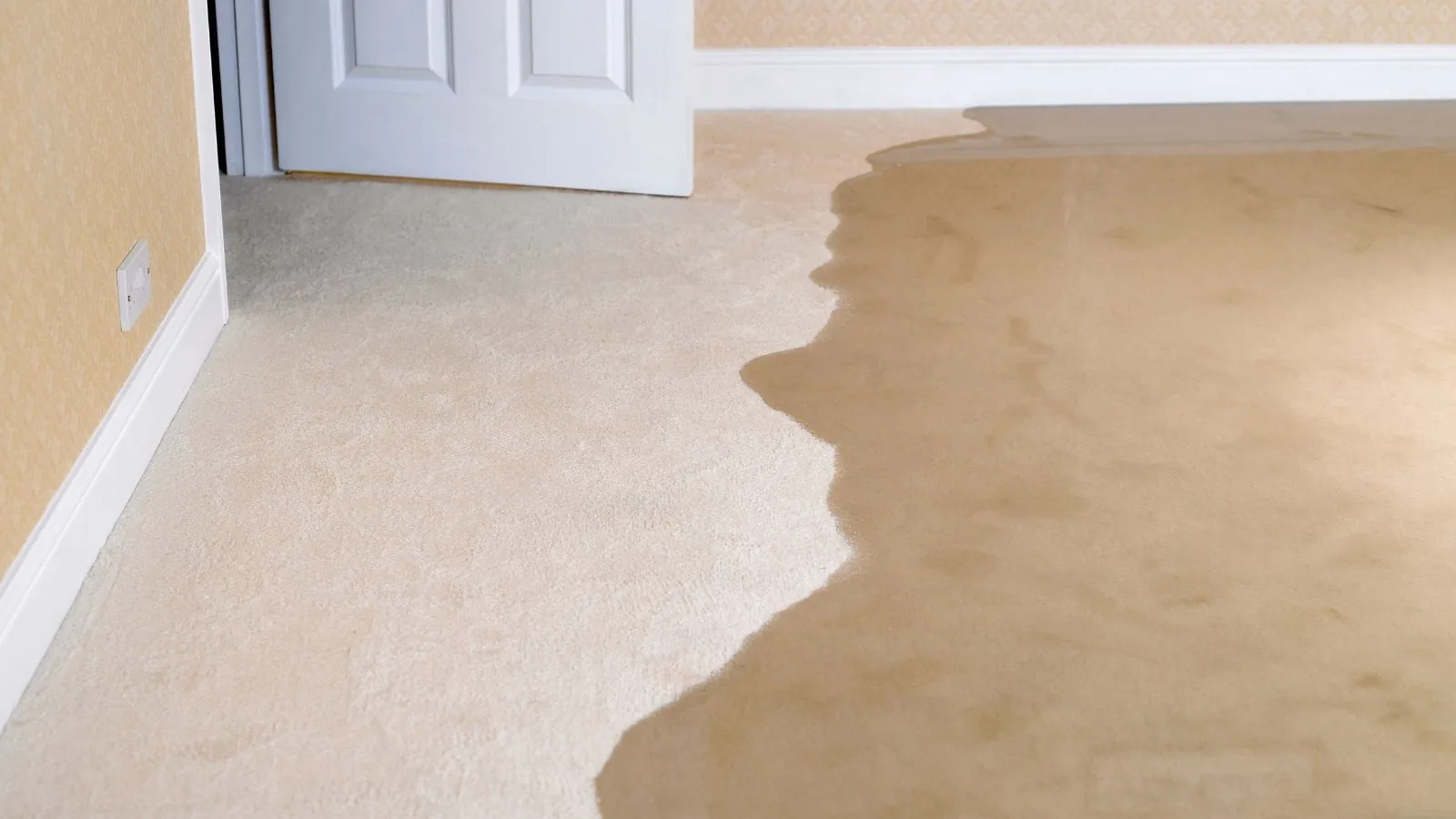
When wet carpet can be saved
The water source decides the outcome. Clean water from a supply line that was caught quickly often allows the carpet to be extracted and dried in place, and the pad is often replaced separately. Grey water from a washer or dishwasher is more borderline. Sewage or flood water means carpet and pad come out.
Time matters too. Carpet that stays wet for days is harder to save, and odors set in. The sooner water is extracted, the better the odds.
Carpet decisions by water type
| Water type | Carpet | Pad |
|---|---|---|
| Clean supply water, fresh | Extract and dry in place | Often replaced, sometimes dried |
| Grey water | Clean and dry, sometimes replace | Replace |
| Sewage or flood water | Remove and dispose | Remove and dispose |
| Clean water, wet for days | Evaluate case by case | Replace |
| Rain through a ceiling or wall | Dry in place when clean | Check for odor and staining |
How carpet drying works
Extract water
Weighted wands pull water from carpet and pad.
Lift and ventilate
Carpet is lifted from the tack strip at the edge so air moves under it and the pad is removed if needed.
Dry the floor
Air movers dry the underside and the subfloor. The dehumidifier controls the room.
Reinstall or replace
Carpet is stretched and reset after the floor is dry, or new carpet and pad go in.
Carpeted lower levels in Mahopac homes
Finished basements with wall-to-wall carpet are where we see the most carpet loss. The Putnam County hazard plan records that Hurricane Sandy flooded basements in the Town of Carmel through blown-out culverts, and sump failures during storms add to the list. Carpet in a lower level that floods usually does not survive contaminated water.
If the water came from a storm or a sewer backup, see storm water damage cleanup or sewage backup cleanup, since those change the carpet decision.
What affects carpet restoration cost
Carpet area
More square footage means more extraction and more material.
Pad condition
Pad is cheaper than carpet and is usually replaced.
Water category
Contaminated water means disposal and replacement.
Odor control
Treatment and drying add steps.
Tack strip and subfloor
Wet tack strip and subfloor may need replacement.
New carpet
Material grade and labor are your choices.
We separate drying from replacement so you can compare the options.
Carpet over concrete and carpet over wood
Carpet over a concrete slab dries differently from carpet over a wood subfloor. Concrete holds water and releases it slowly, so a dehumidifier does the heavy lifting and the pad may need to come out entirely. A wood subfloor can absorb water and swell, and it has to be dried before new pad goes down.
Area rugs are a separate case. They can usually be cleaned and dried off site, and the floor underneath gets its own drying.
Odors after wet carpet
A musty smell means moisture is still present somewhere, usually in the pad, the tack strip or the subfloor. Deodorizing without drying only masks it. We dry first, then treat what remains, and we tell you if the pad or subfloor has to be replaced before the smell goes away.
Reference standard
We use the ANSI/IICRC S500 water damage standard as a reference for how wet structures are evaluated and dried. That is a statement about the standard we follow, not a claim of any certification. The standard is also the reason carpet and pad are judged by water type and how long they stayed wet.
Carpet is wet and the smell is starting
Call and tell us how long it has been wet.
What to do with wet carpet
- Remove furniture and put aluminum foil or blocks under the legs of furniture you must leave.
- Do not use a household vacuum on wet carpet.
- Keep fans running and the room ventilated if the water was clean.
- Take photos of the carpet and note the water source.
Carpet water damage questions
As soon as possible. Carpet that stays wet develops odors and the pad and subfloor stay wet longer.
Usually. Pad acts as a sponge and is cheap to replace compared with the risks of leaving it.
No. Carpet exposed to sewage is normally removed.
It can be re-stretched after drying. A carpet installer can help.
Sudden water damage often is. Flood and long-term seepage often are not. Check your policy.
The same rules apply. Basements dry slowly, so we use dehumidifiers and monitor closely.