
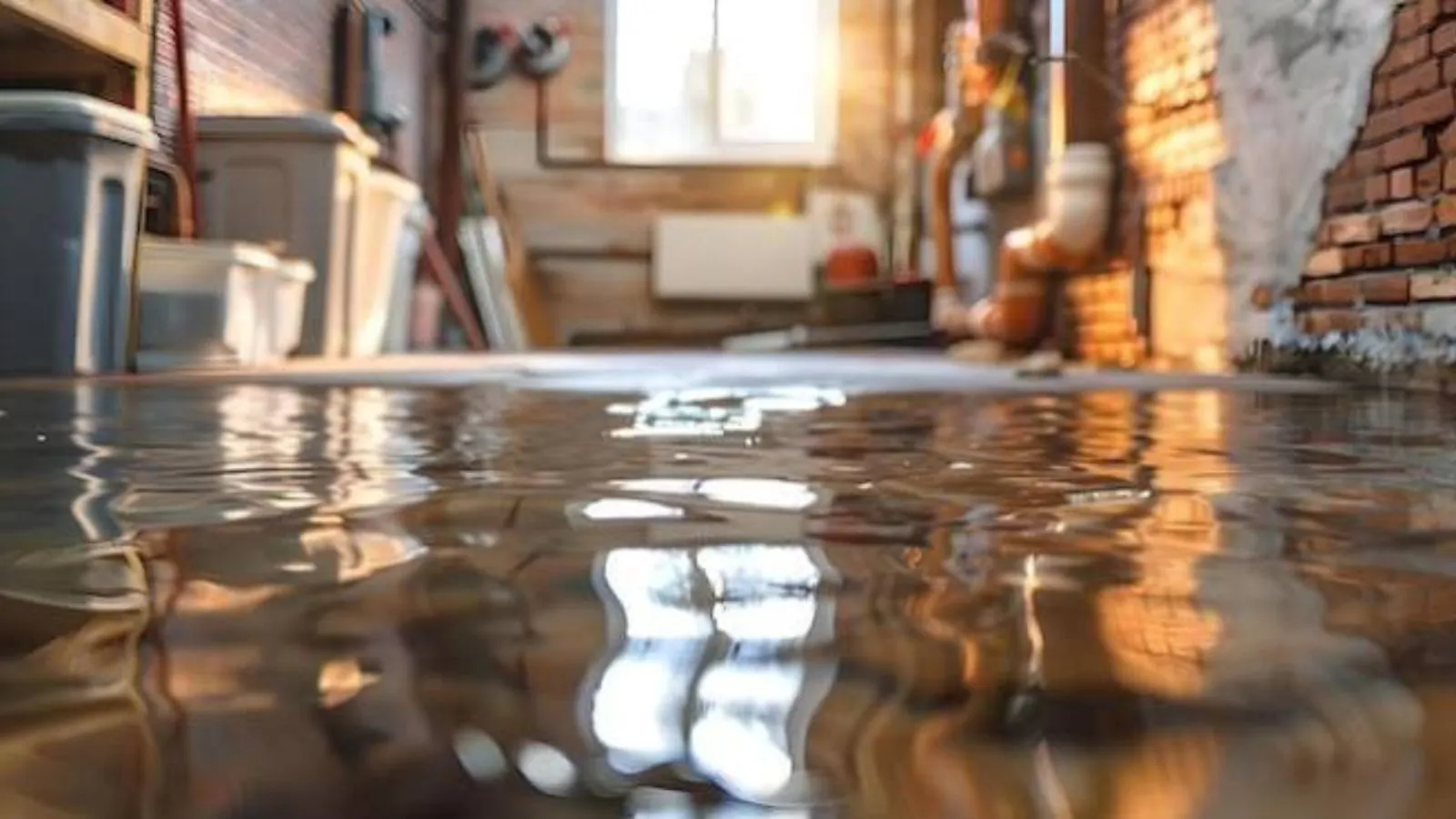
What to look for during the showing
- Ceiling stains, fresh patches or paint that does not match the rest of the room.
- Cupped, buckled or stained flooring, especially near exterior doors and appliances.
- Musty odor in basements, closets and under stairs.
- A sump pit, pump and discharge line, and whether the pump runs and where it drains.
- Rust stains, efflorescence or white mineral deposits on foundation walls.
- Windows that fog between panes and sills with peeling paint.
- Crawl space or basement items stored on shelves rather than on the floor.
Clues, causes and follow-up
| Clue | Possible cause | Follow-up |
|---|---|---|
| Stain on a lower ceiling | Plumbing above or an old leak | Ask for repair history and a plumber's opinion |
| Fresh paint in one corner of the basement | Seepage or past flooding | Ask about flooding and see receipts |
| Water stain on the water heater floor | Past tank leak | Check tank age and drain |
| Soft spot near a tub or shower | Leak behind the wall | Ask for an inspection and moisture readings |
| Damp smell in the crawl space | Groundwater or condensation | Ask a specialist to inspect |
Check the flood maps and the town's records
Look at the FEMA flood map for the address, and ask the Town of Carmel building department about flood zone status. The town adopted its Flood Damage Prevention Law on January 9, 2013, and the hazard mitigation plan names flood-prone spots, including Lake Shore Drive, the Route 6 and Clark Place area, Hill Street at Route 6, Memory Lane and Sandy Street. If the house is near one, ask the seller about water history.
The plan also records 10 repetitive-loss properties in the Town of Carmel as of July 2020. You may not be able to learn which addresses they are, but it is a reason to ask about prior flood claims and flood insurance. Lenders can require flood insurance in a mapped flood zone, so ask your agent for a quote before closing.
Questions for the seller and the inspector
Ask about water history
Has the house flooded, leaked or had a claim? Where and when?
Ask for records
Repair receipts, plumber and roofer reports and insurance claim paperwork.
Hire an inspector
A home inspector can use a moisture meter and look at areas you cannot.
Follow up on findings
Ask a specialist for a scope and price on any problem found.
Reading the inspection report for water clues
Inspection reports often hide water clues in the notes. Look for phrases such as elevated moisture, evidence of previous leak, efflorescence, staining or recommend further evaluation. Each one is a prompt to ask who will follow up and when.
If the report suggests more checks, get them done during the contingency period. A plumber, roofer or restoration company can give a written scope that you can use in negotiations.
Questions for your lender and insurer
Ask your lender whether the property is in a mapped flood zone and whether flood insurance is required. Ask your insurer for a quote on a homeowners policy and a flood policy before you commit, because premiums and exclusions differ by address.
Also ask about water backup coverage, which is often an endorsement and can matter more for a house with a basement and a sump pump.
Looking at the outside is half the inspection
Walk the property and look at the grading, downspouts and the lowest windows. Water that has nowhere to go will find the basement. Check for cracks in the foundation, stains on exterior walls and the condition of the roof, gutters and flashing from the ground.
Ask the seller where the sump discharges and whether the property sits near a stream, lake or culvert. In a town with many lakes and culverts, nearby drainage matters as much as the house itself.
Found water damage you did not expect?
Call and we will tell you what repair would involve.
Using what you find in negotiations
Water damage that has been repaired and documented may not be a deal breaker. An open problem, a missing paper trail or an active leak is different, and it can justify a price change, a repair credit or walking away. The seller's disclosure statement is a starting point, and an inspector's report adds detail.
To understand the cost of common problems, read our basement water damage cleanup and crawl space water damage cleanup pages. If the house is in Carmel or Baldwin Place, check which town's building department holds its permit history.
Buying a home questions
No. Inspectors see what is visible and measurable that day. Hidden leaks, past floods and seasonal seepage can be missed.
Yes. The building department can tell you about permits for past repairs and about open permits.
If it is in a mapped flood zone and has a mortgage, probably. Ask your lender and agent.
Ask when it started, check the sump and dehumidifier and have an inspector take moisture readings.
Not by itself, but it is a reason to ask what was covered and to look for moisture or seepage.