
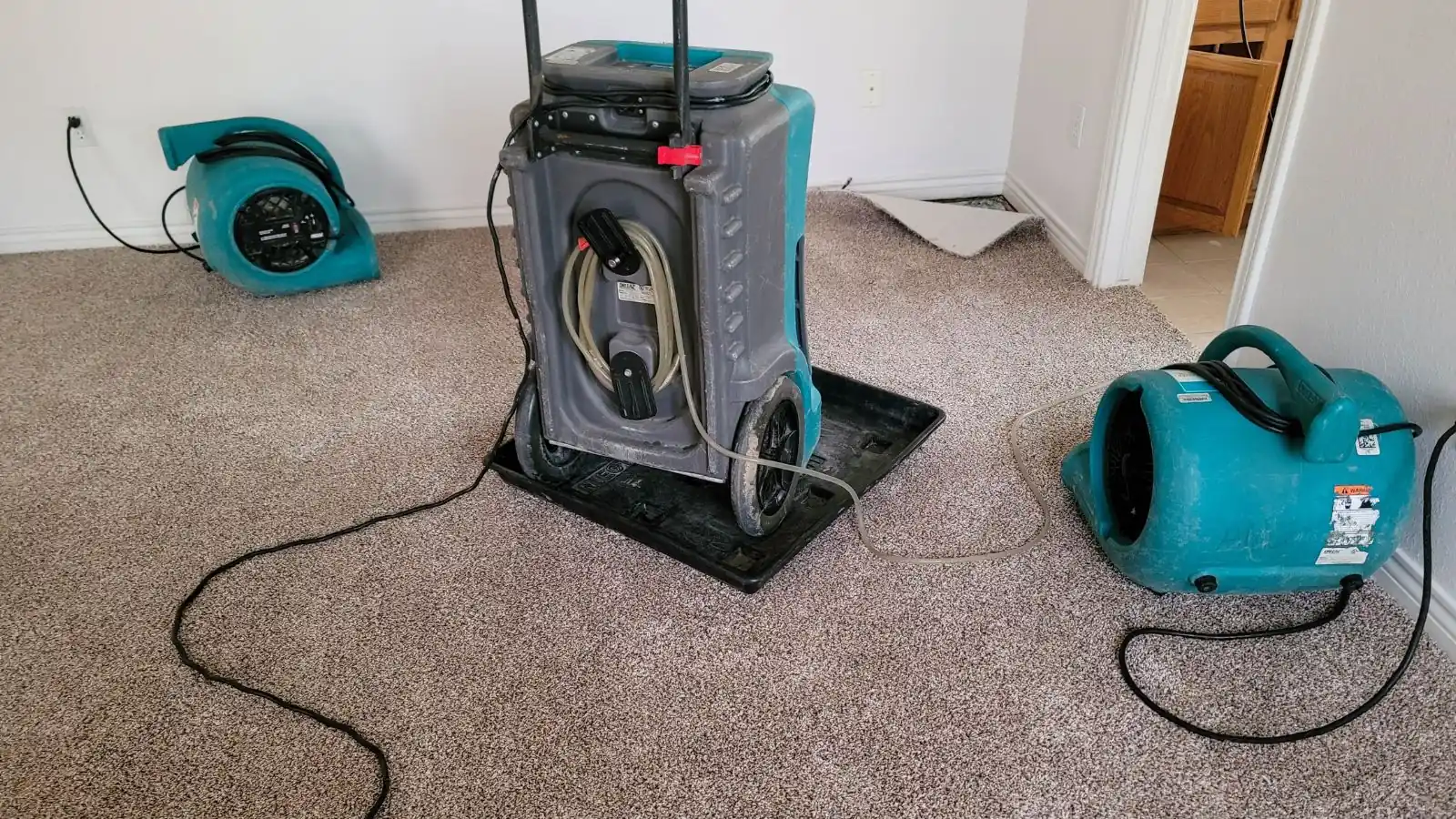
Why there is no fixed number of days
Drying is physics. Water leaves a material only as fast as the air next to it can take it. That depends on how much water got in, how dense the material is, how warm the air is and how dry the air is. Two houses with the same leak can dry in very different times.
The ANSI/IICRC S500 water damage standard is the industry reference for evaluating and drying wet structures, and it frames drying in terms of goals rather than a fixed schedule. A contractor who promises a specific number of days without readings is guessing.
What changes the drying time
| Factor | Faster drying | Slower drying |
|---|---|---|
| Material | Thin drywall, carpet | Hardwood, plaster, concrete |
| Water category and time | Clean and caught quickly | Long-standing or deep |
| Air humidity | Dry, warm air | Humid summer air |
| Airflow | Open, with air movers | Closed cavities and tight spaces |
| Starting point | Water extracted early | Water left standing |
How you know the drying is done
Compare with a reference
Readings in wet areas match dry readings from unaffected areas of your house.
Check cavities
Wall and subfloor cavities read dry, not just the surface.
Confirm the room humidity
The air in the drying area returns to normal ranges.
Remove equipment last
Equipment stays until readings confirm the goal.
Humid lake summers and cold, dry winters
Mahopac's lakes mean humid summer air, which slows evaporation. A job in July leans on dehumidifiers more than fans. In winter the air is dry, which helps, but cold framing dries slowly and the heat has to stay on.
Basements near the lakes dry slowest because concrete releases moisture and the ground nearby can stay damp. Older homes with plaster walls dry more slowly than newer drywall. See our basement water damage cleanup and hardwood floor water damage repair pages for how those cases run. For nearby towns, see Mahopac Falls and Putnam Valley.
The stages of a drying job
Extraction
Bulk water is removed first. This step shortens everything that follows.
Setup
Air movers, dehumidifiers and sometimes drying mats are placed based on moisture maps.
Active drying
Equipment runs while daily readings track progress and equipment is adjusted.
Confirmation
Final readings are compared with the dry reference and the equipment is removed.
What an unrealistic promise sounds like
Be cautious of anyone who promises that everything will be dry by a certain day before taking readings. Be cautious too of a company that removes equipment because the surface feels dry. Drying is a measured process, and a plan should include checkpoints and a way to adjust when readings do not fall.
A good contractor gives you an expected range and explains what could change it, such as a hidden wet cavity or humid weather.
Why equipment noise and heat are part of the plan
Drying equipment is loud and puts out heat, and that can be frustrating for the people who live in the house. The heat helps the process, and the airflow is what moves moisture out of materials. Turning equipment off to sleep or to host guests slows the job, so plan around it if you can.
If the noise is a real problem, tell the contractor. A good one can adjust equipment placement and may be able to shift the schedule without hurting the result.
Mistakes that stretch drying time
- Opening windows in humid weather, which lets damp air in.
- Unplugging the dehumidifier because of the noise.
- Stacking boxes or furniture against wet walls.
- Painting or covering a wall before readings confirm it is dry.
- Skipping the final readings and removing equipment early.
Not sure your house is dry?
Call and we will take readings and tell you what they say.
What you can do to help drying
- Keep exterior doors and windows closed in the drying area while equipment runs.
- Do not turn off equipment or move it unless the contractor says so.
- Keep the heat or cooling on at a normal level.
- Remove soaked contents from the room.
- Report any new odor or staining right away.
Signs drying was cut short
A musty smell that returns, paint that bubbles weeks later, baseboards that stay cool and floors that cup or move after drying are signs that moisture remained. These often appear after a job that ended too early or relied on surface feel.
If this has happened, a moisture survey can find what is still wet. See wall and drywall water damage repair for the repair side.
Drying time questions
It varies with the water, materials and weather. The job ends when readings reach the goal, not on a calendar date.
Keep the area closed, the heat on and equipment running. Opening cavities can help, and a professional decides where.
Not necessarily. Moisture inside walls and subfloor takes longer to leave.
Concrete holds water and releases it slowly, and the ground can stay damp. A dehumidifier does most of the work.
Usually yes, because wood is dense and has to be dried slowly to avoid cracking.