
What a musty smell actually tells you
The smell of dampness comes from materials that stay wet for long periods. It does not identify a cause, and it does not by itself tell you whether mold is present. It tells you that moisture is trapped somewhere, and that the place to start is with finding the wet material.
Masking the smell with sprays or fragrance hides the signal without solving the problem. If a room smells damp a week or two after a leak was cleaned up, assume something was missed and look for it.
Where trapped moisture usually sits
| Place | Why moisture stays | How to check |
|---|---|---|
| Carpet pad | Absorbs water and dries slowly under carpet | Lift a corner and feel or measure |
| Behind baseboards | Water wicks up and gets trapped | Pinless meter or removing a small section |
| Wall cavity insulation | Holds water against the framing | Thermal camera and meter |
| Subfloor and joists | Dense wood dries slowly | Meter from below or through a pulled board |
| Basement slab and stored boxes | Concrete releases moisture for a long time | Concrete test and dehumidifier readings |
| HVAC ducts and drain pans | Condensation and leaks | Visual inspection by an HVAC technician |
Finding the source in order
Follow your nose
Smell is strongest near the source, so note which rooms and corners are worst.
Check the obvious wet places
Look under sinks, behind appliances and around windows for stains or drips.
Use a meter
Readings on baseboards, drywall, flooring and subfloor show where moisture is.
Dry it
Remove what cannot be dried and dry the rest with air movers and a dehumidifier.
Humidity near the lakes makes odors linger
Mahopac sits around Lake Mahopac, a 587 acre lake, with Kirk Lake, Lake Casse and Lake Secor close by. Summer air near the water is humid, and a basement or closet that is not ventilated holds that moisture. A damp smell in a lower level can come from ordinary humidity as well as a leak.
That is why a reading beats a guess. If the meter shows dry materials and the humidity is high, the answer may be a dehumidifier and ventilation. If readings are high at the baseboard or under the floor, a leak or wicked water is the cause. Our pages for Mahopac Falls and Putnam Valley describe the lake conditions in those nearby towns.
Damp odor and mold: what you can and cannot say
A musty odor is not proof of mold, and the absence of an odor is not proof of its absence. If you see fuzzy growth or discoloration or a testing professional finds it, that is a separate problem from damp materials. Ask whether your state licenses mold work before hiring anyone for it.
What we handle is the water side. Removing the moisture is the step that helps whether or not mold is present, and it is what our carpet water damage restoration and wall and drywall water damage repair pages describe.
Why a dehumidifier does more than a fan
Fans move air but do not remove water from it. A dehumidifier pulls water out of the air and drains it away, which lowers the humidity and encourages damp materials to release their moisture. In a humid climate near lakes, a fan alone can recirculate damp air.
A good rule is to size the dehumidifier to the room, keep the door closed and empty the tank or use a drain hose. Check the humidity with a simple hygrometer and aim for a comfortable indoor range.
When to call for help
Call when the smell persists after the obvious wet items are removed, when a stain grows, when baseboards feel cool and damp or when family members notice the smell is worse in one room. Someone with a meter can find the wet material in minutes and tell you whether it can be dried.
Closets, basements and the places we forget
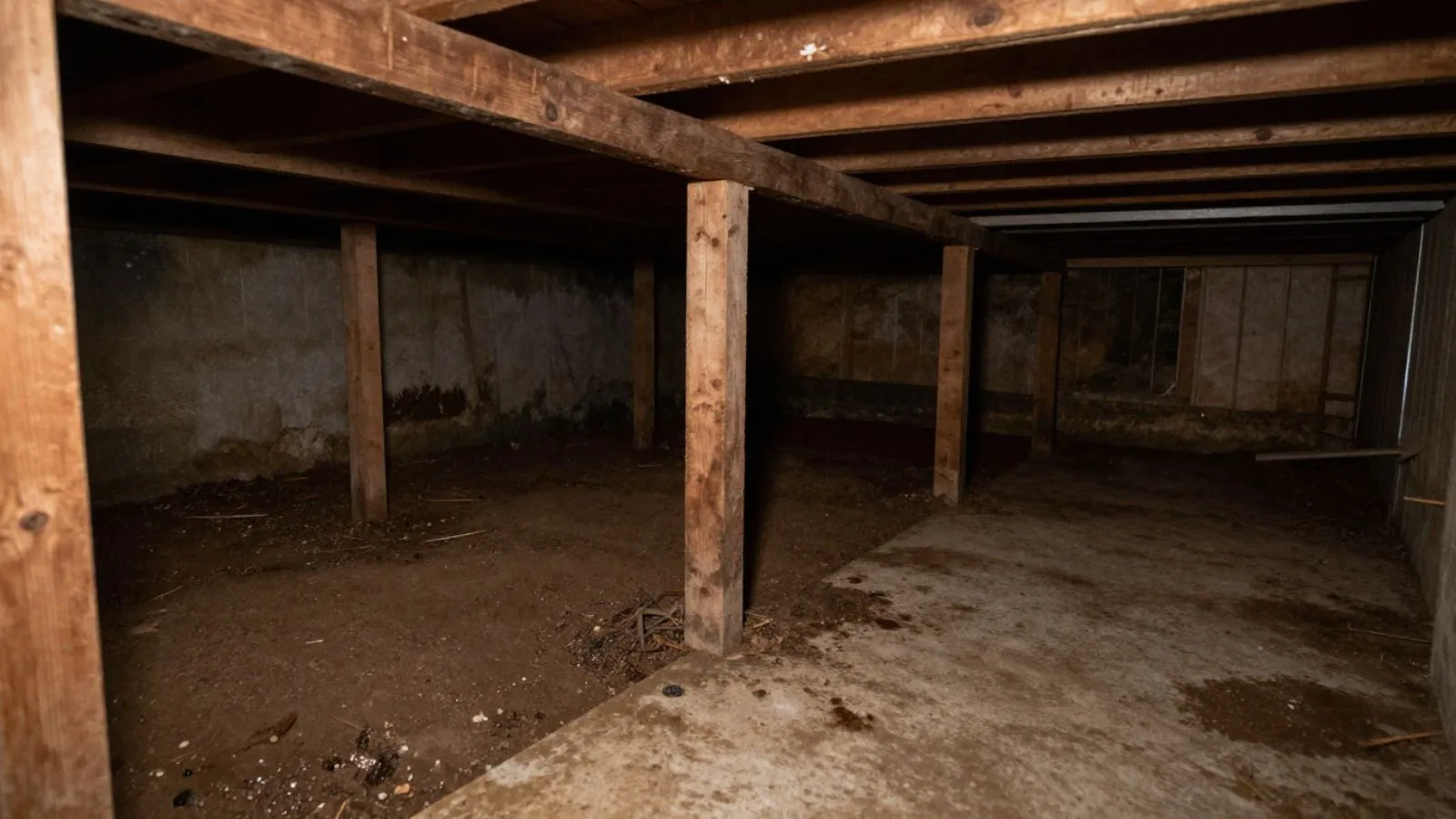
Damp smells often come from places that rarely get checked. A closet against an exterior wall, the space under a basement staircase and a storage room with a floor drain can all hold moisture. Stored cardboard boxes and fabric make the smell stronger because they absorb moisture and release it slowly.
Pull stored items away from walls and look at the back of the wall and the floor. If you find staining or soft drywall, photograph it and have the wall checked with a meter before you repair it.
Where the guidance comes from
The ANSI/IICRC S500 water damage standard is the industry reference for drying wet structures. We do not give health advice about odors or mold. If someone in the home is ill, ask a physician.
Smell still there after cleanup?
Call and we will take readings and tell you what we find.
What helps while you wait
- Run a dehumidifier in the closed room and empty it daily.
- Move stored items off the floor and away from walls.
- Open interior doors so air moves through the space.
- Replace wet carpet pad and insulation rather than treating them.
- Avoid scented sprays that cover the odor.
Musty smell questions
Not necessarily. It means moisture is trapped. Mold may or may not be present, and testing or inspection answers that.
Only if the cause was surface dirt. If something is still wet, the smell returns.
Humidity rises and wet materials release moisture into the air. A dehumidifier and a drying check help.
In dry weather, yes. In humid weather near the lakes, it can add moisture. Use a dehumidifier instead.
Warm humid air meets cool concrete and condenses. A dehumidifier and ventilation help, and a moisture check rules out a leak.