
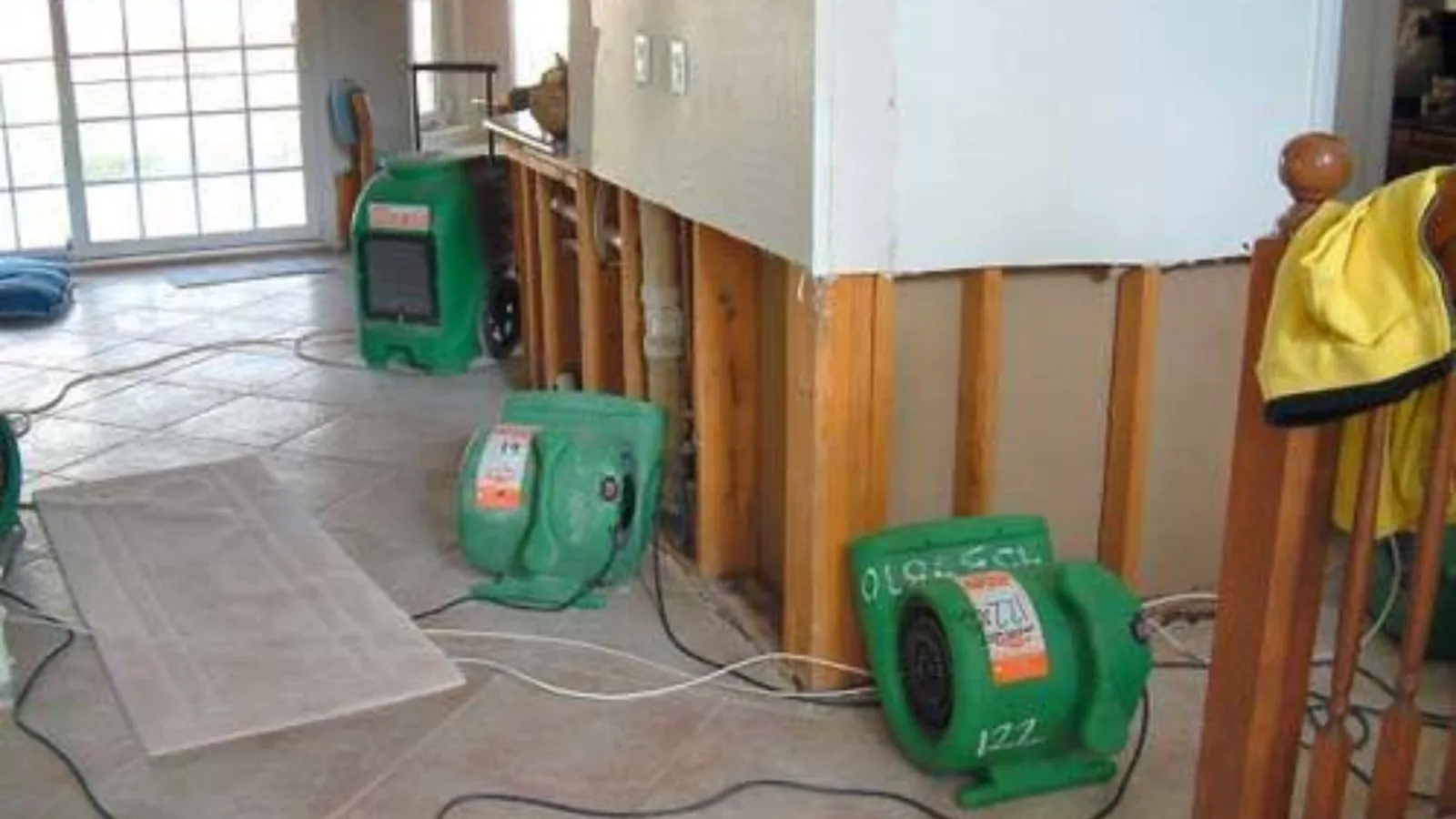
Why surfaces lie about moisture
Touch and sight detect surface water. They miss the water inside drywall, behind baseboards and in subfloor. Gypsum, plaster and wood can hold a surprising amount of water while looking and feeling normal, which is why a room can seem dry the day after the wipe-up and then smell damp a week later.
Meters turn the question into a number you can compare with a reference. They do not diagnose a cause. They tell you where moisture is and whether it is going up or down.
Meter types and what each is good for
| Tool | How it works | Best use |
|---|---|---|
| Pin meter | Two pins pressed into the material measure electrical resistance | Wood framing, baseboard, hardwood |
| Pinless meter | A sensor plate scans a few inches below the surface | Drywall, plaster, finished floors |
| Thermal camera | Shows temperature differences, which can mark wet areas | Finding wet patterns across walls and ceilings |
| Hygrometer | Measures humidity in the air | Tracking the room during drying |
| Concrete test | Measures moisture in or at the slab surface | Basement floors and flooring installation |
How readings guide a drying job
Set a dry reference
Readings are taken in a similar, unaffected area of your own house to define what dry looks like for each material.
Map the wet area
Readings across walls and floors outline how far water traveled.
Track daily
The same points are measured again to confirm the trend.
Confirm the goal
Drying is done when wet materials match the dry reference.
Why humid lake homes complicate readings
Mahopac sits around a 587 acre lake, with Kirk Lake, Lake Casse, Lake Secor and others close by. Summers near the water are humid, and moisture content in wood and plaster runs higher than in a dry inland house. A reading that looks high may be a normal summer baseline, which is why the dry reference is taken from your own home rather than from a chart.
Older Mahopac homes can have plaster walls, which read differently from drywall. Plaster dries slowly and meters can read high at the surface long after water is gone. Experience and comparison are both part of the interpretation.
Questions to ask whoever takes the readings
- What is the dry reference reading, and where was it taken?
- Which material was measured and with which tool?
- Can I see the readings on paper with the date and location?
- What is the plan if readings do not fall as expected?
- Will you repeat the readings before removing equipment?
What a drying log should show
A good drying log is a table of the same measurement points over several days. Each row has the date, the room, the material and the reading, along with the humidity in the room and the equipment running. The trend matters more than any single number, because falling readings show that drying works and flat readings show that something is wrong.
If readings stall, the usual causes are a cavity that is closed, a dehumidifier that is overwhelmed or a hidden source of water that was never fixed. The log helps the contractor decide whether to open a wall, add equipment or call a plumber.
Common mistakes when reading a meter
- Using a wood setting on drywall or plaster, which gives misleading numbers.
- Taking one reading and treating it as the whole story.
- Measuring a metal fastener or pipe, which makes a pin meter jump.
- Comparing with a chart rather than with a dry area of the same house.
- Testing only the surface and skipping the cavity behind it.
Where a meter helps most after a leak
The best uses are the places you cannot see. Behind baseboards, inside a wall below a leaking window and under a floor next to a dishwasher are all places where a meter gives you information a visual check cannot. A thermal camera adds a picture of where the water traveled.
Use a meter to decide whether to open a wall, not as a reason to open every wall. A good survey keeps demolition small because readings show where water actually is.
Where the guidance comes from
The ANSI/IICRC S500 water damage standard is the industry reference for how moisture readings are used to judge when materials are dry. Meter makers also publish their own scale guidance for each material.
Not sure if a wall is really dry?
Call and we will take readings and explain what they say.
DIY meters and their limits
Inexpensive meters sold at hardware stores can be useful for a quick check, especially pinless models on drywall. They are not calibrated to the same scale as professional tools, and a single reading without a reference does not tell you much. Treat them as a screening tool.
If a cheap meter shows a high reading near a baseboard or under a sink, take photos, note the numbers and call someone who can map the wall. Our pages on wall and drywall water damage repair and hardwood floor water damage repair describe what comes next. For nearby areas, see our Mahopac Falls and Carmel pages.
Moisture meter questions
There is no single number. Each material has its own scale, so we compare against a dry reference from your home.
No. It detects moisture. Mold is identified by testing and inspection.
They see temperature differences, and wet areas often show up as cooler spots. Meters confirm.
Moisture can move from deeper layers to the surface, and readings can rise before they fall. That is why daily tracking matters.
Often yes, because humidity is higher. That is why your own dry reference is the right comparison.